Progressive Epoxy Polymers, Inc.

"The Right Epoxy Fixes Darn Near Everything!"
EPOXY PRIMER - EPOXY SEALER
Progressive Epoxy Polymers, Inc.
"The Right Epoxy Fixes Darn Near Everything!"
NO SALES TAX - You are shopping in TAX FREE New Hampshire
Questions? / Phone order? / EMAIL / CALL 603-435-7199 EST / BUY ONLINE
ESP 155 - epoxy primer and sealer
Our ESP 155 ™ is a solvent thinned epoxy, classified as a ‘waterproofing' coating and has a VOC level of 239 g/l. This is a legally acceptable level of solvents for a waterproof coating except in California, where this product cannot be sold or used. Use on weathered fiberglass boat hulls, trailers etc. Use to seal wood or concrete, prime and seal concrete floors or under varnish on table tops as a primer, sealer or tie coat.
READ HOW THIS AMAZING EPOXY PRIMER AND TIE COAT CAN MAKE ALL YOUR PROJECTS BETTER
We are the only technology based coating/epoxy/resin company that actively encourages your phone calls, not just during our East Coast work hours but also after/before hours, evening, weekends and even holidays. We're available when you are. We form a personal relationship with our customers and freely share technical information, how to-advice, product information and tips-and-tricks. Speak with a non-salesman technical professional with over 25 years of experience in the resin/coating/epoxy industry (no newbie staffer on the phone lines!). Floors, tables, boats, leaks, rot repair. We handle it all!
Your Host and Tour Guide:
Paul Oman, MS, MBA - Progressive Epoxy Polymers, Inc. (floor epoxies, marine epoxies, underwater epoxies, repair epoxies)
Member: NACE (National Assoc. of Corrosion Engineers), SSPC (Soc. of Protective Coatings)
"Professionals helping Professionals since 1994"
|
best option for outdoors |
|
|
|
Minwax (tm) oil stain - left to dry for 2 weeks - 2 coats ESP 155 epoxy sealer and primer - 4 coats of India Spar Varnish (note ESP 155 and Varnish are not for sale in California) |
ESP 155 Solvent Thinned Commercial Epoxy Sealer
Primer
Solvent thinned epoxy for sealing priming and
waterproofing - Compare to XYZ
Brand
CUSTOMER COMMENTS
"Thanks for the help on the phone yesterday with the 2100F epoxy. Using a smaller batch in a wide tray worked out great. I appreciate your help, and especially that you are available by phone...and answer the phone. Thanks again". ---- Tim 9/16
"Thanks for all your advice, tips & moral support concerning my project. It turned out beautiful. Quality people backing a quality product is the only way to go!" Joe
Generally epoxies used as primers use lots of solvents and the lowest quality epoxy available. ESP is an amazing exception, probably nothing else like it available. It uses a top of the line cycloaliphatic curing system as a starting point! The other 'penetrating/sealing' epoxies are very vague about the epoxy they use in their product - bottom of the line, el cheapo stuff I would imagine.
Product Applications
BEST USES FOR ESP 155 EPOXY
1) PRIMER SEALER FOR CONCRETE FLOORS
often used under decorative or pigmented epoxy floor coating to improve bonding and adhesion and to reduce or stop outgassing of air from the concrete which will cause bubbles in the thicker epoxy floor paint. (will your floor epoxy vendor even tell you this?). Also when you cannot perform professional concrete floor prep (usually with a shot blast machine). And also important on floors that seem a bit weak or dusty (epoxy floor paints are surface bond only so a weak surface is a crisis waiting to happen). See floor links page. - and our other page on concrete sealing.
|
Best advice from an Epoxy PRO on how to avoid a $$$ DIY epoxy floor disaster (you won't learn this on any other epoxy floor site) If any of the following apply or might apply to you: 1) no vapor barrier, or don't know if there is a vapor barrier under your slab; 2) suspect there might be moisture issues in/on the slab; 3) suspect the concrete was not 'vibrated down' and contains lots of air spaces (which can cause bubbles and blisters in the wet epoxy); 4) cannot professionally prep the floor (usually means a shot blast contractor); 5) any existing coating on the floor is peeling and lifting; 6) the concrete seems dusty, gritty, weak or crumbling; 7) you are worried about "hot tire pickup" lifting off your epoxy floor; 8) you have oil stains on the floor (especially OLD oil stains)....... If so, consider putting an inexpensive epoxy primer / sealer (such as ESP 155 - an Internet Favorite epoxy coating - not for sale in California) on the entire floor or over those potential trouble spots. Then wait a few weeks or months and see what happens. If everything looks great it is very likely that a 'fancy' epoxy top coat will be successful and probably issue free. You might even decide to just keep the sealed floor and skip the thicker mostly decorative (or at least thicker and pigmented) epoxy top coat (such as 0% VOC INDUSTRIAL FLOOR EPOXY). If problems developed with the thin, nearly clear ESP 155 epoxy sealer, it is not that big a deal. No worse than having some deck/porch enamel paint lift and peel. You won't trip over it, it is not so 'in your face', and you saved big $$$ that you would have spent on the epoxy, paint chip, top coat. Some existing concrete surfaces are just not good candidates for an epoxy coating. QUESTIONS? email OR call 603 435 7199. Floor Links Page. Learn all about epoxy floors. |
Have a concrete floor that needs protecting? Let's talk (603 - 435 - 7199 or EMAIL)
2) INEXPENSIVE EPOXY FLOOR
After you have sealed the concrete with ESP 155 you will have a clear glossy (looks like a water spill) very thin coat of epoxy on the surface. It will probably not be thick epoxy to level and fill chips other flaws, but it will be a waterproof layer of chemical resistant epoxy. If this was your objective you could stop here and optionally paint the ESP 155 with enamel or latex paint for looks only, or leave it plain. Since a half gal kit of ESP 155 covers about 150 square feet this is a way to get a relatively inexpensive, high quality (but not so pretty) epoxy floor.
Have a concrete floor that needs protecting? Worried about cost?Let's talk (603 - 435 - 7199 or EMAIL)
3) FIBERGLASS PRIMER (especially boat hulls)
old and weathered fiberglass is not a good surface to simply paint over. This is especially true when working on old fiberglass boat bottoms. Often old boat bottoms are sand blasted back down to the old fiberglass. The blasting itself introduces microscopic chips and cracks. Blasting or sanding imbeds sanding/blasting dust into the old fiberglass surface. A coat of ESP 155 will seal any micro factures, seal any weathered fiberglass dust and provide a fresh, clean new bonding surface for your paint or marine barrier coat epoxy.
Worried about that old fiberglass surface? Let's talk (603 - 435 - 7199 or EMAIL)
4) WOOD SEALER AND ROT PREVENTER
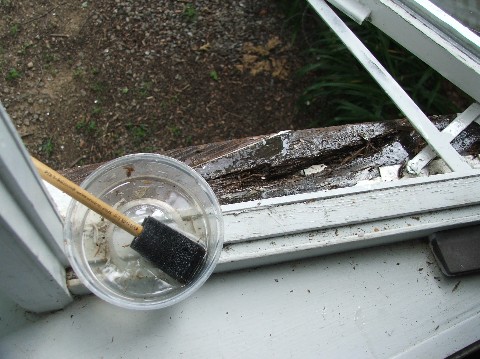
ESP 155 is used on new or fresh wood surfaces to prevent future rot. Customers use it on outside window sills and frames. I have used it on replacement wood siding. After using this epoxy it is paint over. I have commercial customers that use it on wood before paint to get a smoother and more durable paint finish. See picture above. More on ROT.
|
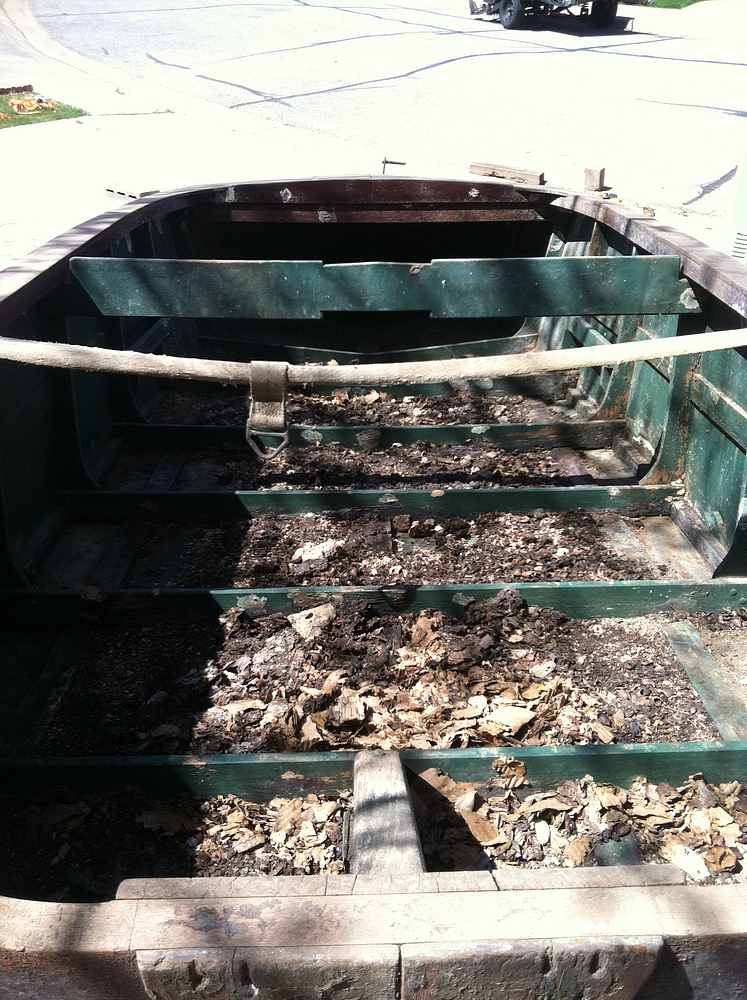
Before boat is sad shape |
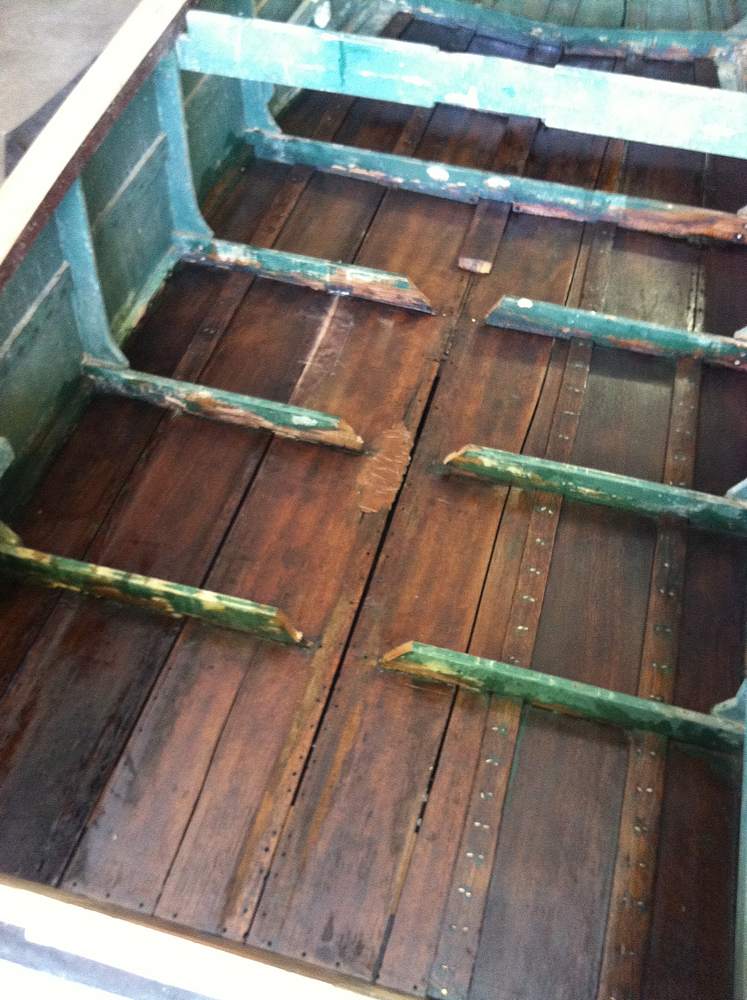
After Staining And ESP 155 epoxy |
|
|
Boat Restoration Using ESP 155 solvent based epoxy sealer and primer Find this epoxy on our favorites page |
 |
 |
Have a damp area that is sure to rot? Let's talk (603 - 435 - 7199 or EMAIL)
5) UNDER VARNISH FOR LONGER LIVE
Epoxy under old fashion marine varnish is a win-win combination. The epoxy sealer stablizes the wood surface and the varnish provides needed UV protection. The varnish can also be waxed to a mirror like finish. Many folks think they want a poured epoxy table top or bar top, but really would be better off with a thin coat of epoxy like ESP 155 with a top coat of our marine spar varnish (varnish not for sale in California). See cart picture example at top of this page site.
Want max life on that
varnish coated surface?
Let's talk (603 - 435 - 7199 or
EMAIL)
Product Details
Our ESP 155 ™ is a solvent thinned epoxy, classified as a ‘waterproofing' coating and has a VOC level of 239 g/l.
This is a legally acceptable level of solvents for a waterproof coating except in parts of southern California,
where this product cannot be sold or used.
This product is a Progressive Epoxy
Polymers, Inc. best selling, favorite product. Visit our FAVORITES - 7
EPOXIES THAT WILL FIX ANYTHING web page
at:
epoxyproducts.com/favorites4u.html View other popular one-of-a-kind
products.
The more I work with this product, the more I am impressed with it, hence the reason behind this page.
The product is a clear watery thin epoxy with a simple 1 to 1 mix ratio. It is sold in two one quart cans. It was
originally designed for use on concrete to seal the product the cement. It was/is then often top coated with some
other coating. Because it is a thin coating, it can often fill or seal small voids or holes near the surface of
the concrete that can expel air resulting in bubbles and creators in thicker top coatings (such as thick epoxies).
Use for ESP 155 is to pre-coat wood surfaces prior to painting with latex or enamels. Wood expands or contracts with moisture levels, where as other materials, including paints, expand and contract with temperature. This means that wood and the coating on it can be working against each other, resulting in a coating failure. In my experience this is more of a problem with wood that has already been ‘weathered' outdoors. These wood surfaces probably already have a lot of internally trapped moisture.
Besides effecting how wood expands or contracts, moisture in wood also affects the adhesion of many coatings. Most
paints and coatings (including a majority of epoxies) don't bond well to wet, damp or moist surfaces - including
wood with a high internal moisture level.
Often used as a primer and sealer on old, weak, concrete floors and sun damaged fiberglass boat hulls (often before the application of a marine epoxy barrier coat, bottom paint, or 2 part poly hull paint.
|
Order this two part ESP !55 EPOXY Product NOW (cannot be sold in Southern Calif.) from our large Primary web store or call 603 435 7199 to order |
The product also uses a very high end
cycloaliphatic epoxy -
instead of the very low end epoxies found in other solvent thinned epoxies of
this kind.
One trick with the ESP 155 is to use some of our pigments (or some other pigment) to shade the ESP 155 slightly.
It is easier to see how evenly you're applying it when it has some color instead of being clear. Also, if you are
going to paint the surface, let's say white, tinting the ESP 155 white may mean you can skip that second or third
coat of white paint.
If you cannot use the ESP 155 (say, you live in southern California), then your alternative option is our Low V™
epoxy. The Low V epoxy is solvent free so it can be sold anywhere. It is thicker than the solvent thinned ESP 155
so it would not, in theory, seep into the wood or cement as well as the ESP 155. The Low V does bond and harden
underwater, like the ESP 155. In confined spaces, such as in a boat hull blister, you would not want to use a solvent
thinned coating, because the solvents have no place to evaporate away to.
|
Why ESP 155 epoxy sealer and primer is the BEST in its class: 1) Uses superior CYCLOALIPHATIC curing agents and epoxy ADDUCT formulation 2) solvent based for better penetration 3) moisture tolerant, very low viscosity 4) strong user support / feedback 5) 24/7 support NO SALES TAX - You are shopping in TAX FREE New Hampshire - New England's "Granite State" |
| THIS PRODUCT | xx | EMAIL US | xx | |
| air shippable | cycloaliphatic system | xx | ||
| no nonyl phenol | epoxy adduct system | xx | ||
| multi curing agents | bulk pricing | |||
| solvent free | no Calif. sales | xx | ||
| 2 part epoxy | xx | 2 part poly | ||
| apply underwater | bubble breakers | |||
| favorite(s) product list | xx | data sheets | xx | |
| PACKING - jugs/bottles | PACKING - cans | xx | ||
| find in non marine cat | xx | find in marine catalog | xx | |
| PRICES/ind/commercial | xx | PRICES/marine section | xx | |
| BUY online | BUY online | xx | ||
| home page | xx | contact page | xx |
The EPOXY GURU - Internet's most popular epoxy repair/help site. Leave your questions for the everyone's favorite Guru.
7 epoxies/coatings to fix 'darn near' everything - today's best coating technologies
ESP 155 IS ONE OF THESE EPOXIES
See how Sunken Yacht is saved by
epoxies applied underwaterESP 155™ in our marine epoxy catalog ---- in our res/industrial marine catalog --- epoxy data/msds link
Also visit our ESP 155 primer/sealer page at : everything-epoxy.info
Low V in our marine epoxy catalog / Low V in our res/industrial epoxy catalog.
Compare to other "Penetrating Epoxy Products"
| Order this two
part ESP !55
EPOXY Product
NOW (cannot be sold in Southern Calif.) from our large Primary web store or call 603 435 7199 to order |
Compare to other "Penetrating
Epoxy Products"
COMMON APPLICATIONS: concrete wood and fiberglass sealer and bond enhancer, base coat under varnish and 2 part poly coatings, base coat and sealer on wood and old fiberglass boat hulls
READ MORE ABOUT ESP 155 AT: WWW.PAINTS-COATINGS-EPOXIES.COM/a_esp155_epoxy_sealer.html
CALL for more INFO/ORDER
603 435 7199
|
MARINE CATALOG |
HOME/DIY/COMMERCIAL CATALOG |
|
Section One
TWO PART MARINE EPOXIES- CLEAR EPOXIES |
Section A EPOXY PAINTScorro coat FC 2100; NSP 120; water gard 300; coal tar ; CM 15; crack coat™ |
|
Section Two
FILLERS THICKENERS ADDITIVES fumed silica; microsphere/balloons; poly fibers; copper; graphite; Teflon (tm); wood flour; EZ thick; rock flour
|
Section B FLOOR EPOXIES (regular and non-skid products), SEALERS, ACCESSORIESwater bond (water based); solvent free industrial floor epoxy; bio vee seal; water based floor epoxy, floor epoxy with grit; walnut shell; ground white rubber grit |
|
Section Three
THICKENED EPOXIES - EPOXY PUTTIES, ETC. wet/dry 700; splash zone; quick fix 2300, QR 2400 rubber epoxy |
Section C THICKENED EPOXIES - EPOXY PUTTIES, ETC.wet/dry 700; splash zone A-788, quick fix 2300; QR 2400 (tm) rubber epoxy |
|
Section Four
TWO PART EPOXY PAINTS (barrier coats) corro coat FC 2100; water gard 300; CM 15; EZ Spray; epoxy primer; crack coat™ |
Section D CLEAR TWO PART EPOXIESlow V epoxy; basic no blush; ESP 155; Bio-Clear 810 |
|
Section Five
URETHANES AND NON-EPOXY COATINGS
Aluthane (aluminum coating);
LPU Marine |
Section E NON-EPOXY PAINTSSEALERSAluthane moisture cured urethane; Acrylic Poly UV Plus and other 2 part polys ; Capt. Tolley's creeping crack sealer |
|
Section Six
NON-SKID DECK COATINGS walnut shell; ground white rubber
|
Section F MIX-IN ADDITIVESfumed silica; fiber fill; micro balloons/micro-spheres; graphite; Teflon (tm); copper powder; wood flour; EZ thick, rock flour |
|
Section Seven
MARINE REPAIR PRODUCTS pipe wrap; fiberglass tape (cloth); Capt. Tolley's Creeping Crack Cure |
|
| Section Eight MISC. MARINE PRODUCTS short nap rollers; TA 661 (solvent free epoxy clean-up); 1 inch foam brushes; 2 inch bristle brushes; tongue depressors |
|
|
Call (603-435-7199) or EMAIL with questions /phone orders etc. about what you're doing. We try to earn your business one phone call at a time! |
|
Legal stuff - returns
NOTICE: Legal notices, Terms of Service, warranty information, disclaimers, health warnings, etc. are required reading before using web site, ordering and/or using Products. Any such use and/or ordering, online or by telephone, shall constitute acceptance and knowledge of all such terms.
CLICK HERE to access these terms. Please note: Whenever you purchase from this web site, and with each new purchase, you are granting us full and complete permission to add you to our email newsletter list at our option.
RETURNS: call or email for authorization to return. Returns are subject to a 25% restock fee. Customer pays return shipping and must comply with federal DOT shipping requirement/labeling for hazmat epoxies under penalty of fines and legal action.
Navigation Bar frame replacement CLICK HERE mobile friendly key site links
** Quick EMAIL / ph 603.435.7199 EST / Google SITE SEARCH / Buy On-line TWO STORES / Goto Contact PAGE / Web Product CATALOG / Progressive Epoxy HOMEPAGE / View our VIDEO / Navigation Bar REPLACEMENT / Data and MSDS PRODUCT INFO / Epoxy Guru HELP SITE / Top Selling Products - FAVORITES * *