NONYL PHENOL FREE EPOXIES
Progressive Epoxy Polymers, Inc.
Pittsfield, NH 03263
Quick EMAIL / ph 603.435.7199 EST / Google SITE SEARCH / Buy On-line TWO STORES / Web Product CATALOGS
"We are the only company that shows you who we are (watch our 2 min video); special chemical advantages of some of our epoxies (nonyl free epoxies -- epoxy adducts -- cyclo-aliphatic epoxies); and who offers phone (603 - 435 - 7199) or email support for help, questions, and/or orders. We go the extra mile for your respect and support."
We sell about 25 different epoxies for different applications - Four of them are nonyl free - (scroll down to learn more about them).
Nonyl Phenol is a common chemical additive in almost all epoxies. It has both good and bad properties.
| LEARN ABOUT: |
| Cycloaliphatic epoxies |
| Epoxy adducts |
Your Host and Tour Guide:
Paul Oman, MS, MBA - Progressive Epoxy Polymers, Inc. - (floor epoxies, marine epoxies, underwater epoxies, repair epoxies)
Member: NACE (National Assoc. of Corrosion Engineers), SSPC (Soc. of Protective Coatings)
"Professionals helping Professionals since 1994"
Nonyl Phenol is a common chemical additive in almost all epoxies. It has both good and bad properties.
Good Properties:
* used to adjust the mix ratio of part A and part B to whole numbers
* can add useful properties to epoxies with additives/thickeners (we had an epoxy paste that become a crumbling mess when we attempted to remove the nonyl from the formulation)
* used as a thinner with thicker epoxy resins
* useful as a low cost accelerator/catalyst for epoxy curing
Bad Properties:
*
can be used as a way to cheaply 'water down' the epoxy to increase profits
(the major problem and a clue to CHEAP epoxy!!!)
* probably slightly reduces the epoxies physical properties
* reclassified as a 'hazmat' ingredient around 2009, meaning most epoxies require hazmat or ORM-D shipping
* nonyl-phenol has potential health risks
* appears to sometimes retard the drying of alkyd (oil based) enamels applied over epoxies containing nonyl phenol (often to unacceptable levels) in high humidity/dew point conditions - see following link:
---------- lots more info on the nonyl vs. enamel paint issues / recommendations (or why won't my paint dry?)
Properties of Epoxies without Nonyl Phenol:
* more likely to be non-hazmat to ship (other factors/ingredients also come into play)
* probably slightly better epoxy physical properties
* part B (the curing agent) more likely to be dark amber colored instead of clear or slightly amber
* traditional alkyd (oil based) enamel paints dry without problem over these epoxies
Does it contain Nonyl Phenol?
Check the MSDS sheet for parts A and B of your epoxy. You have a legal right to see the MSDS document. If the vendor/store
resists your request, find a different vendor or store.
Epoxies offered by Progressive Epoxy Polymers, Inc. without Nonyl Phenol:
1) Premium No Blush -- (world's best marine epoxy???) visit our Boat Links Page
2) Bio Clear 810 -- (world's best bar top epoxy???) visit our Bar Top Page
3) Corro Coat FC 2100A -- (world's best epoxy paint???)
4) Industrial Floor Epoxy -- (world's best floor epoxy???) visit our Floor Links Page
We have lots of information on the above products. Google their name and search the web for them.
Visit our contact page and email / call with your questions. epoxyproducts.com/contact.html
info below
Premium No Blush (tm)
Marine epoxy (non hazmat to ship -
and cycloaliphatic
besides!)
find in catalog
|
Why Premium No Blush epoxy is the BEST in its class: 1) Can be shipped by air 2) cycloaliphatic epoxy system 3) formulated with no nonyl-phenol for more perfect finish 4) amber curing agent brings out the wood color 5) strong user support / feedback 6) 24/7 support
|
Bio Clear 810 (tm) - top selling professional bar and table top epoxy (requires 1/4 inch pours into a 'pan' setting)
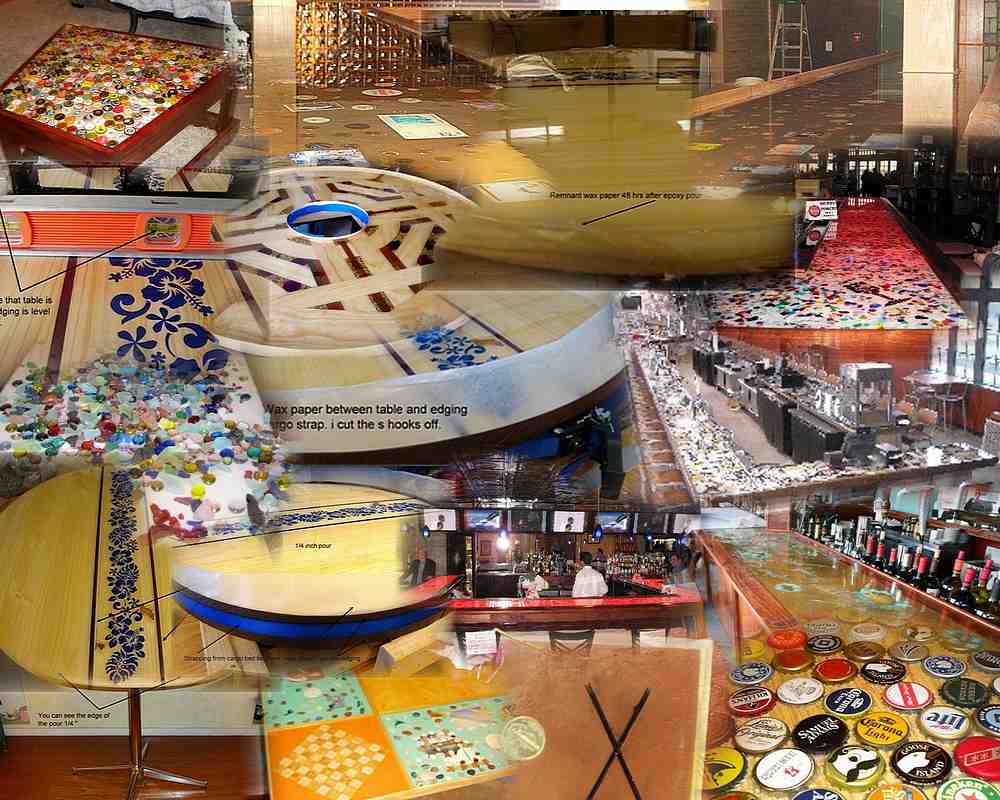
Professional bars done with Bio Clear 810
the ONLY cycloaliphatic system and no nonyl phenol
Corro Coat FC 2100A (tm) - kelvar (tm) ceramic reinforced epoxy paint that can be applied to wet or damp surfaces - learn more
|
Why Corro Coat FC 2100A epoxy is the BEST in its class: 1) Gap filling Kevar (tm) based epoxy paint 2) can be applied underwater 3) special high end curing agents allow shipping by air 4) no nonyl phenol 5) cycloaliphatic formulation 6) no odor or solvents 7) strong user support / feedback 8) 24/7 support |
FC 2100 saves a sunk boat -- details -- Available at Barnes and Noble and Amazon
Industrial Floor Epoxy
(tm) - solvent free professional - commercial grade floor epoxy"PAINT LIKE A PRO"
Professional contractors apply Industrial Floor Epoxy (tm)
Now you can too! catalog page or buy now
|
Big
Floor
Project?
Our
100%
solids
INDUSTRIAL
FLOOR
EPOXY
can
be
purchased
in
any
gallon
amount
over
15
gal,
packed
in 5
gal
pails
and
shipped
direct
from
the
factory.
Our
regular
1.5
gal
kits
are
always
in
stock
for
immediate
shipping.
15
gal
covers
about
2,000
sf.
Find
Industrial
Floor
Epoxy,
with
pricing,
in
the
floor
section
of
our
catalog
- or
call
603
-
435
-
7199 SUPERIOR NON-PHONYL FREE FORUMULATION |
Dear Sir, We applied the Industrial Floor Epoxy in our work trailer yesterday, and I swept off the excess sand today. We are very pleased with the results.
None of us had any particular experience with this kind of application, but we followed the instructions, had a fairly cool morning to do the work, and managed to complete the application in about 90 minutes, dividing the work and mixing epoxy in three sections. I would recommend this material to friends looking to do similar work. Thank you for your assistance, the all-purpose sand was quite adequate for our needs.
|
Why Industrial Floor epoxy is the BEST in its class 1) no nonyl phenol 2) no odor or solvents 4) strong user support / feedback 4) 24/7 support |
Now that you have learned about nonyl-phenol
learn about epoxy adducts, and cycloaliphtics.
"Knowledge is Power"
| LEARN ABOUT: |
| Cycloaliphatic epoxies |
| Epoxy adducts |
| Nonyl phenol additives |
Then call us to talk about how these superior
epoxies can help you. 603 - 435 - 7199
Learn More about Epoxy
Basic Properties - visit our Epoxy 101 web site
Progressive Epoxy Polymers, Inc.