
PROGRESSIVE EPOXY POLYMERS, INC.
GOOGLE SITE SEARCH - Click here
Nothing but Quality Products at Good Prices, Great Customer Service, and Lots and Lots of Helpful Information
and NO SALES TAX - You are shopping in TAX FREE New Hampshire
MARINE EPOXY SOLUTIONS- EPOXY PAINTS AND REPAIR PRODUCTS
Osmosis & Glassfibre Yacht Construction
- 2nd Edition (1995)
By Tony Staton-Bevan
Published by Sheridan House ($19.95) telephone: 914-693-2410
Marine Barrier Coats
and Osmotic Blister Quotes EPOXY
Comments from: Osmosis & Glassfibre Yacht Construction - 2nd Edition 1995 -
osmotic blisters and barrier coat issues EPOXY
|
After reading what these PROs say, visit our complete, customized, osmotic hull blister repair with Kevlar (tm) based epoxy page. Then visit our epoxy barrier coat system options page. Call to discuss your boat and purchase everything you need from a single source - plus 24/7 help and support from boating resin professionals. A Better Business Bureau Company. 603-435-7199 |
Your Host and Tour Guide: You're talking with: Paul Oman, MS, MBA -- Member since 1994: NACE (National Assoc. of Corrosion Engineers), SSPC (Soc. of Protective Coatings) -- Technical Help - not sales talk!
Former Sailing Instructor -- 1976 Yachting Magazine -- Jr. Article Writing contest 1st place winner -- Boat builder -- Founder: Friday Night Kayaking Club
Boat US member since Dec. 1980
PROGRESSIVE EPOXY POLYMERS, INC.
|
PAGE AND SITE NAVIGATION |
|||||||||||||||||
No Sales Tax applied. Save Money, you're shopping in Tax Free New Hampshire
MEMBER: Internet Epoxy Confederation (IEC - CLICK HERE TO VISIT) -- "Where Professionalism Still Matters"
We've been selling epoxy - marine epoxy (boat building - wood / fiberglass repair) industrial coatings - garage paint - underwater epoxies - thick putties - tabletop resins and supplies since the early 1990's |

We have found an excellent book on boat blisters and
are quoting below some passages from that book.
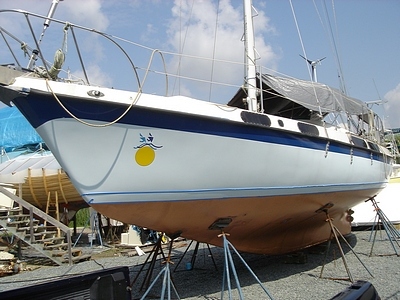
page 26 -- Protecting the underwater portion of a fiberglass
hull
At present epoxy based paints seem to offer the best protection, due to
their superior adhesive qualities and resistance to water penetration. Although in the past solvent-based epoxy
paints have proved fairly reliable, to achieve an effective water barrier requires a build up of at least four
coats of paint. In doing this it is possible for solvents to be trapped within the coating, or even in the hull
itself, which can result in the epoxy remaining soft and being less waterproof.....
Further research and development by paint companies led to the production of solvent-free epoxy paints. These products
have many advantages. They can be applied up to 8/1000 of an inch (8 mils) per coat and since they contain no solvent,
they wet and dry film thicknesses are virtually the same. Many solvent-based epoxy paints have a dry film thickness
of less than half that when wet."
COMMENTS FROM PROGRESSIVE EPOXY POLYMERS, INC.:
ROLLERS COMMONLY ALLOW A PERSON TO APPLY ABOUT 8-11 MILS OF A SOLVENT FREE EPOXY PAINT. ON ROUGH SURFACES (AND/OR
WITH A BRUSH OR PAINT PAD) IS IT OFTEN POSSIBLE TO APPLY THESE COATINGS AT UP TO 16 MILS. AT 16 MILS COVERAGE IS
100 SQUARE FEET PER GALLON, AT 8 MILS IT IS 200 SQUARE FEET PER GALLON. NOTE THICKER COATS OF EPOXY CAN GIVE YOU
SAGGING SURFACES AS GRAVITY RESPONDS TO THE THICK EPOXY WHICH WILL TAKE HOURS TO SET UP.
WE HAVE NEVER HAD ANYONE APPLY 4 COATS OF EPOXY PAINT AS A BARRIER COAT.
page 28 -- Barrier coat thickness
In my experience a total build-up of something like 16/1000 inch (16 mils)
is needed, and anything thinner than this is less likely to be successful.
COMMENTS FROM PROGRESSIVE EPOXY POLYMERS, INC.:
WE COMMONLY SEE THE FIGURE OF 10 MILS AS A SUITABLE THICKNESS.
page 30 -- More on barrier coat thickness
My experience and that of others, is that a solvent-free epoxy coating
of at least 16/1000 (16 mils) is required for protection and at least 24/1000 (24 mils) for treatment, after the
gel coat is removed, and these are proving to be very effective.
COMMENTS FROM PROGRESSIVE EPOXY POLYMERS, INC.:
WE GENERALLY SEE ONE COAT OF A SOLVENT FREE EPOXY (GENERALLY OUR WATER GARD 300 EPOXY) ROLLED ON (AT ABOUT 8-11
MILS), OR TWO COATS IF THE GEL COAT HAS BEEN REMOVED.
SOMETIMES A SOLVENT BASED EPOXY PRIMER, OR A SOLVENT THINNED COAT OF THE WATER GUARD EPOXY IS APPLIED AS A PRIMER
UNDER THE BARRIER COAT. THIS IS DONE TO IMPROVE ADHESION OF THE SOLVENT FREE EPOXY TO AN OLDER OR WORN FIBERGLASS
HULL.
We really appreciate you visiting PROGRESSIVE EPOXY POLYMERS, INC. and our web site: EPOXYPRODUCTS.COM. Take advantage of the CONTACT links on this page to ask questions about our products and/or your projects. You can stay in touch with us via our NEWSLETTER (link on our contact page) which is emailed every 6-8 weeks.
This current page is all about:
|
|
WOW! 35% - 40% of all daily online or telephone orders are from existing customers. That's an amazing 'REPEAT CUSTOMER" number. |
|
603 - 435 - 7199 ANYTIME 24/7 FOR HELP OR ORDERS |
|
|
|
|
page 38 -- Regarding hull blister repair with epoxy
The first coat is worked well into the exposed laminate. Following this,
the hull is reprofiled with epoxy filler. When smooth and fair, sufficient coats of epoxy paint are applied to
give a total dry film thickness of about 24/1000 inch (24 mils)....
Having protected the outside of the hull, what about the inside? Although I have no firm evidence of blistering
caused by water working it way through from the inside of the hull, it is important to seal the bilges, and again,
epoxy paint is the ideal coating. I have seen water in the bilges cause slow disintegration of the laminate by
hydrolysis.
COMMENTS FROM PROGRESSIVE EPOXY POLYMERS, INC.:
THIS IS VERY SIMILAR TO OUR METHOD OF FLUSHING THE OPENED BLISTER THEN SEALING IT WITH A THIN EPOXY, THEN USING
EPOXY PUTTY TO FAIR AND SMOOTH.
I HAVE SEEN AN ARTICLE OR TWO SHOWING WATER DAMAGE TO FIBERGLASS HULLS ON THE INSIDE SIDE OF THE HULL.
web site on hull blisters - click here
web site on marine barrier coats - click here
|
The Marine Epoxy Everything Guide Everything from user reviews, repair examples, pricing issues and vendor evaluation tips
Basic No Blush Marine Epoxy Product Page Marine Epoxy Catalog page (multiple epoxies) Basic No Blush Marine Epoxy User Reviews / Feedback How To Evaluating Marine Epoxy brands and Vendors Marine Epoxy prices - what it really costs! Marine Epoxy amine blush - what is epoxy Blush? Boat repair examples using Marine Epoxy Dinghy Marine Epoxy boat repair case study Progressive Epoxy Polymer's marine web site Massive site of Internet boat links
|
|
ONLINE PRODUCT CATALOGS PROGRESSIVE EPOXY POLYMERS, Inc |
|
|
ONLINE STORE Purchase Here ------ or CALL 603 435 7199 ------ HOME PAGE |
|
|
Marine Catalog |
|
* home
page of marine catalog section (blue background)
|
|
| Section One MARINE - CLEAR EPOXIES Section Two FILLERS THICKENERS ADDITIVES Section Three THICKENED EPOXIES - EPOXY PUTTIES, ETC. Section Four EPOXY PAINTS (barrier coats) Section Five URETHANES AND NON-EPOXY COATINGS Section Six NON-SKID DECK COATINGS Section Seven MARINE REPAIR PRODUCTS Section Eight MISC. MARINE PRODUCTS |
|
|
MASSIVE BOAT HOW TO - ISSUES - HELP WEB LINK SITE |
|
|
Residential / Commercial / DIY Catalog |
|
* home
page of residential/commercial catalog section (brown background)
|
|
|
Section A EPOXY PAINTS Section B FLOOR EPOXIES (regular and non-skid products), SEALERS, ACCESSORIES Section C THICKENED EPOXIES - EPOXY PUTTIES, ETC. Section D CLEAR EPOXIES Section E NON-EPOXY PAINTS COATINGS SEALERS Section F MIX-IN ADDITIVES Section G OTHER PRODUCTS Section H SURFACE PREPARATION PRODUCTS Section I MISC. ACCESSORIES |
|
|
WEB EPOXY FLOOR ISSUES LINKS SITE --- WEB EPOXY REPAIR LINKS SITE |
|
|
top selling favorite products for your every need Buy Talk Chat Support EMAIL or 603 435 7199 American manufactured, distributed, and sold epoxies and coatings. Your business helps small American Family Businesses - Thank You! |
Epoxy Only Web Google Search
#1) Google
Everything Epoxy Searches
#2) Google
Marine Epoxies Searches
#3)Google
Floor Epoxy Searches View
our Progressive Epoxy Products, Inc.

|
After reading what these PROs say, visit our complete, customized, osmotic hull blister repair with Kevlar (tm) based epoxy page. Then visit our epoxy barrier coat system options page. Call to discuss your boat and purchase everything you need from a single source - plus 24/7 help and support from boating resin professionals. A Better Business Bureau Company. 603-435-7199 |

 |
 |
 |
||
|
site master |
protagonist |
ground zero |
Marine Barrier Coats
and Osmotic Blister Quotes EPOXY
Comments from: Osmosis & Glassfibre Yacht Construction - 2nd Edition 1995 -
osmotic blisters and barrier coat issues EPOXY