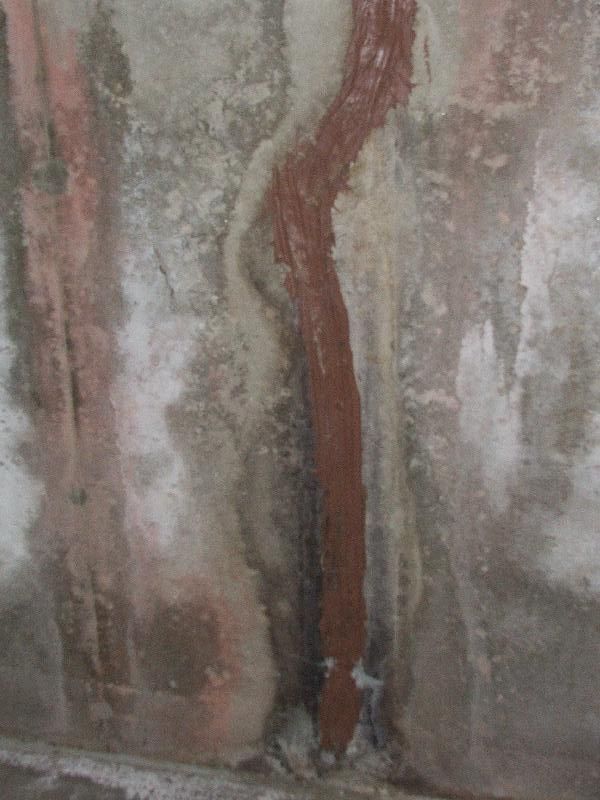
EPOXY CONCRETE REPAIR
GOOGLE SITE SEARCH - Click here
Using our Epoxy mortar patch. (use for runway remediation - potholes, spalling in
cement floors etc.) Mix about 10 pounds of sand with 1 gallon of this epoxy
(15 pounds of sand for this 1.5 gal kit) and use to patch holes and chips in concrete.
Learn about epoxy patch - repair before buying any product for Concrete Repair
Your Host and Tour Guide:
Paul Oman, MS, MBA - Progressive Epoxy Polymers, Inc. (floor epoxies, marine epoxies, underwater epoxies, repair epoxies)
Member: NACE (National Assoc. of Corrosion Engineers), SSPC (Soc. of Protective Coatings)
"Professionals helping Professionals since 1994"
PROGRESSIVE EPOXY POLYMERS, INC.
We are the only technology based coating/epoxy/resin company that actively encourages your phone calls, not just during our East Coast work hours but also after/before hours, evening, weekends and even holidays. We're available when you are. We form a personal relationship with our customers and freely share technical information, how to-advice, product information and tips-and-tricks. Speak with a non-salesman technical professional with over 25 years of experience in the resin/coating/epoxy industry (no newbie staffer on the phone lines!). Floors, tables, boats, leaks, rot repair. We handle it all! We are an 'always available,' one-on-one, technical/scientific, coating company (watch our video). We are NOT one of those fluffy/slick mass sales firms the dominate the internet selling cheap third party (made in China???), low end epoxies and coatings with no real knowledge of what they are selling and quotas to sell to as many people as possible. 603-435-7199 (east coast time).
|
PAGE AND SITE NAVIGATION |
|||||||||||||||||
|
. Epoxy Repair Links Page ====> This 'Linked To' Epoxy Sub-Page
No Sales Tax applied. Save Money, you're shopping in Tax Free New Hampshire
MEMBER: Internet Epoxy Confederation (IEC - CLICK HERE TO VISIT) -- "Where Professionalism Still Matters"
We've been selling epoxy - marine epoxy (boat building - wood / fiberglass repair) industrial coatings - garage paint - underwater epoxies - thick putties - tabletop resins and supplies since the early 1990's |
I am constantly getting calls and catalogs from suppliers wanting me to add their epoxy repair kits for fixing cracks, potholes, etc. in concrete. I am often tempted, but have always stopped short. Most of these products contain a lot of sand, and that sand is heavy to ship to us and for us to ship to you. Basically, it's cheaper and easier to make our own epoxy patching product using nearly any of our epoxies and lots of sand mixed in. Our Epoxy Mortar Patch epoxy Basic No Blush epoxy are our least expensive epoxies and a good starting point. Any of our pigmented epoxy paints will also work and the epoxies we offer that can be applied underwater (also in our epoxy paint section) will work too, even in water filled cracks and holes.
Concrete patching
- Concrete repair - products
(note: I am using cement and concrete as one and the same thing, however they are technically different)
Most non-epoxy concrete patching repair products are some sort of cement. Generally they cannot be feathered out and often have to be at applied least 2 inches thick. I had one call recently with someone that 'leveled' his garage with a thin layer of cement over the existing slab. It was all popping off. If you do use some sort of cement type patching product, make sure you can put it on thin. Also note that it might require up to 30 days to dry or cure before you can paint it.
The above shortcomings are why epoxies are often used instead to patch concrete. Epoxies will generally be hard overnight (some in a few hours). They bond extremely well and can be paint layer thick or inches thick. The downside is that cement is cheap, epoxies are not. Hence you don't use epoxy to level an uneven cement slab - way to expensive!
We really appreciate you visiting PROGRESSIVE EPOXY POLYMERS, INC. and our web site: EPOXYPRODUCTS.COM. Take advantage of the CONTACT links on this page to ask questions about our products and/or your projects. You can stay in touch with us via our NEWSLETTER (link on our contact page) which is emailed every 6-8 weeks.
|
Epoxy Only Web Google Search |
|
 |
#1) Google Everything Epoxy Searches #2) Google Marine Epoxies Searches
#3)Google
Floor Epoxy Searches |
|
View our Progressive Epoxy Products, Inc. |
This current page is all about:
Learn about epoxy patch - repair before buying any product for Concrete Repair
|
|
WOW! 35% - 40% of all daily online or telephone orders are from existing customers. That's an amazing 'REPEAT CUSTOMER" number. |
|
603 - 435 - 7199 ANYTIME 24/7 FOR HELP OR ORDERS |
|
|
|
|
Do it yourself concrete repair -
Generally the process (and all the epoxy repair products) consist of a low cost epoxy and lots of sand, fibers, or some other sort of dense fillers and thickeners, plus some pigment coloring.
For cracks or deep holes we suggest you fill them with sand to within about a half inch to one inch from the surface, then fill completely with a sand mixed with epoxy slurry. That's it. For thin cracks just use the epoxy and pour it into the crack.
As a starting point guide, use our Epoxy mortar patch. (use for runway remediation - potholes, spalling in cement floors etc.) Mix about 10 pounds of sand with 1 gallon of this epoxy (15 pounds of sand for this 1.5 gal kit) and use to patch holes and chips in concrete. The sand will increase the amount of product by about 70% and make a trowelable product. Patch will be hard in 2-4 hours. (note: the addition of the sand is optional). Will work in even underwater! Use less sand and pour into holes or underwater. NOTE: 1 gallon of anything is 231 cubic inches - a gallon of anything spread 1/4 inch will cover 6.2 square feet.
Concrete Repair Warnings
It is important to know that will epoxy will fill a crack or hole, it may not solve what caused the problem. If the under surface is unstable the cement will crack again, near, through, or along the edge of the epoxy repair. DO NOT FILL OR SEAL EXPANSION JOINTS!!! Fill these in and topcoat with epoxy and when expansion occurs the topcoat epoxy will pop off in sheets. Epoxy will not stop normal expansion and contraction. Something must move and give - you cannot prevent it and if you try you will be sorry.
Related links
concrete coating www.epoxyproducts.com/slab4u.html
concrete coating www.epoxyproducts.com/scoat4u.html
concrete coating (homeowners) www.epoxyproducts.com/home4u.html
concrete coating (& wastewater) www.epoxyproducts.com/wwater4u.html
concrete sealing (bio vee seal) www.epoxyproducts.com/jay.html
ON-LINE CATALOG HOMEPAGE.
Inside Our non-marine, commercial, DIY Catalog:
corro coat FC 2100; water gard 300; CM 15; crack coat™; liqua tile 1172 potable water; water prime
Find Corro Coat FC 2100 and Water Gard 300 epoxy in our Best Selling - fix anything Catalog
water bond (water based); industrial floor epoxy; bio vee seal; walnut shell; rough coat grit filled epoxy floor paint; epoxy clear top resi
wet/dry 700; splash zone A-788, epoxy cream; splash zone a-788
Find Wet Dry 700 epoxy in our Best Selling - fix anything Catalog
low V epoxy; basic no blush; ESP 155; Bio-Clear 810; epoxy clear top resin
Find Low V, Basic No Blush, and ES 155 epoxy in our Best Selling - fix anything Catalog
Aluthane moisture cured urethane; Acrylic Poly UV Plus and other 2 part polys ; Capt. Tolley's creeping crack sealer; india spar varnish;
Find Aluthane in our Best Selling - fix anything Catalog
fumed silica; fiber fill; micro balloons/micro-spheres; graphite; wood flour; EZ thick, rock flour;
water activated pipe wrap; TA 661 solvent-free epoxy brush cleaner; fiberglass tape/cloth
short nap epoxy rollers; epoxy/stone deck resurfacing roller; 1 inch foam brushes; 2 inch bristle brushes; tongue depressors
Questions? / Phone order? / EMAIL / CALL 603-435-7199 EST / BUY ONLINE
GOOGLE SITE SEARCH - Click here Epoxy specific site search
Click here - YouTube video. Learn about Progressive Epoxy Polymers Inc.
EVAL4U - how to evaluate your epoxy vendor - CLICK HERE -
Epoxy Only Web Google Search
#1) Google
Everything Epoxy Searches
#2) Google
Marine Epoxies Searches
#3)Google
Floor Epoxy Searches View
our Progressive Epoxy Products, Inc.

 |
 |
 |
||
|
site master |
protagonist |
ground zero |
Learn about epoxy patch - repair before buying any product for Concrete Repair