PROGRESSIVE EPOXY POLYMERS, INC.
Nothing but Quality Products at Good Prices, Great Customer Service, and Lots and Lots of Helpful Information
and NO SALES TAX - You are shopping in TAX FREE New Hampshire
CALL 603-435-7199 (or email).We are the only technology based coating/epoxy/resin company that actively encourages your phone calls, not just during our East Coast work hours but also after/before hours, evening, weekends and even holidays. We're available when you are. We form a personal relationship with our customers and freely share technical information, how to-advice, product information and tips-and-tricks. Speak with a non-salesman technical professional with over 25 years of experience in the resin/coating/epoxy industry (no newbie staffer on the phone lines!). Floors, tables, boats, leaks, rot repair. We handle it all! We are an 'always available,' one-on-one, technical/scientific, coating company (watch our video). We are NOT one of those fluffy/slick mass sales firms the dominate the internet selling cheap third party (made in China???), low end epoxies and coatings with no real knowledge of what they are selling and quotas to sell to as many people as possible. 603-435-7199 (east coast time).
PRIMARY STORE LINK --- TOP SELLING PRODUCTS --- EPOXY GURU HELP SITE --- EPOXY DATA SHEETS
EPOXY SEALERS AND PRIMERS
ABSOLUTE BEST SOURCE for epoxy information, options, USA made products, 24/7/365 help, and support
(EMAIL 603 435 7199)
Your Host and Tour Guide:
Paul Oman, MS, MBA - Progressive Epoxy Polymers, Inc. floor epoxies, marine epoxies, underwater epoxies, repair epoxies)
Member: NACE (National Assoc. of Corrosion Engineers), SSPC (Soc. of Protective Coatings)
"Professionals helping Professionals"
PROGRESSIVE EPOXY POLYMERS, INC.
|
WHO ARE WE? Watch our short 2-minute Progressive Epoxy Polymers video |
|
PAGE AND SITE NAVIGATION |
|||||||||||||||||
|
Epoxy Resin Repair Links Page ====> This 'Linked To' Epoxy Sub-Page
No Sales Tax applied. Save Money, you're shopping in Tax Free New Hampshire
MEMBER: Internet Epoxy Confederation (IEC - CLICK HERE TO VISIT) -- "Where Professionalism Still Matters"
We've been selling epoxy - marine epoxy (boat building - wood / fiberglass repair) industrial coatings - garage paint - underwater epoxies - thick putties - tabletop resins and supplies since the early 1990's |
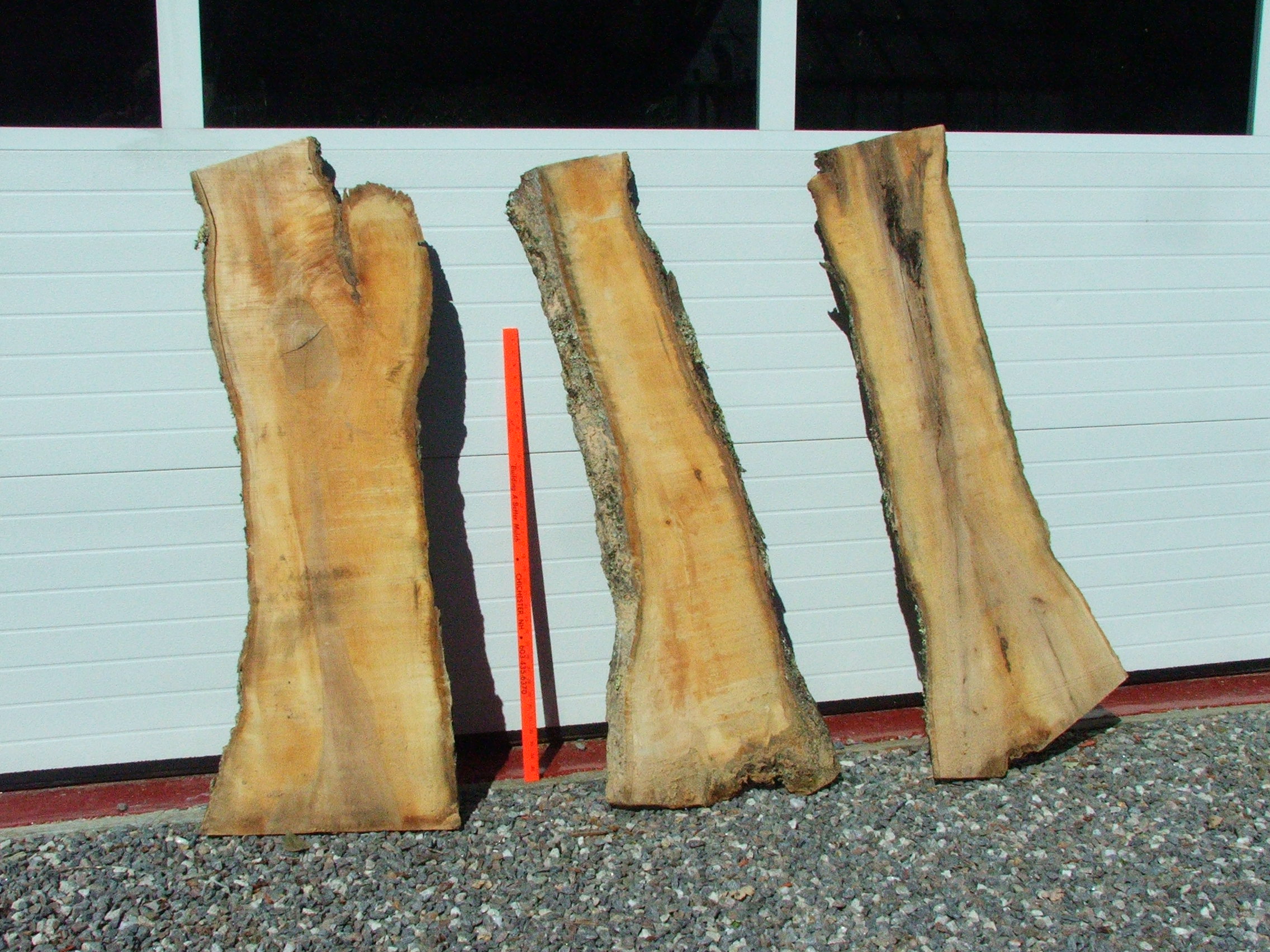
Common wisdom is that the best way to seal wood (and probably concrete) is with a coat of thinned (penetrating) or perhaps unthinned epoxy. I recently decided to test this and the results were surprising.
I began with four blocks of wood cut from a piece of new, cheap pine. Each block was about 3/4 wide and 2 by 2.5
inches square. One block was left uncoated, one was coated with one coat of our Low V (low viscosity) epoxy, one
was covered with one coat of Low V epoxy solvent thinned 15-20%, and the last block was coated with one coat of
our Aluthane moisture cured urethane primer and topcoat. After coating the samples were allowed to cure for 36
hours and then submerged in water for 5 days. There are the results:
plain uncoated block gained 52% in weight
unthinned epoxy coated block gained 17% in weight
thinned epoxy coated block gained 20% in weight
the Aluthane coated block gained 9.5% in weight
The experiment was then repeated using a 3 blocks cut from a new 2 by 4. One block was left blank, one block was
coated with Aluthane and the last block was coated with our water based fluoro polymer. After coating, the blocks
were allowed to dry for 30 hours and then submerged in water for days. The results:
untreated block = weight gain was 35%
fluoro polymer treated block = weight gain was 25%
Aluthane urethane coated block = 14%
Same test. Small wooden blocks coated, allowed to cure for 24 plus hours, then soaked in water for several days.
uncoat block = 19 grams went to 28 grams = 47% increase
block coated with Low V epoxy = 22 grams went to 27 grams = 23% increase
block coated with Aluthane urethane primer = 21 grams went to 22 grams = 5% increase
block coated with "Product X" = 21 grams went to 27 grams = 28.5% increase
MORE TESTS WITH Product X - SEE OCT 27, 2002 TESTS
Same test. Small wooden blocks coated, allowed to cure for 24 plus hours, then soaked in water for several days.
uncoated block = 65% weight gain
blocked coated with a one part urethane clear coat = 31% weight gain
block coated with two coats of one part urethane clear coat = 24% weight gain
block coated with one coat of Aluthane = 16% weight gain
block coated with two coats of Aluthane = 6% weight gain
COMMENTS:
I was surprised that epoxies didn't seal as well as I thought they would. I imagine that two coats - or a thicker
single coat - of epoxy is needed over raw wood to really seal it well. The Low V epoxy I used in these tests is
our low viscosity epoxy. Thinning the epoxy with solvents (making it a 'penetrating' epoxy) lowered the performance
of the epoxy even more.
I was also surprised at the excellent performance of our Aluthane. Even better with two coats
(test #4) I only included it in the first round of tests on a lark. We only carry the Aluthane cause generally
you want an epoxy or some sort of primer under the 2-part polyurethanes we carry and also because the Aluthane,
if used as a topcoat, gives a neat fresh galvanized look to surfaces (such as trailers, sailboat masts, etc). If
you get Aluthane on your hands it doesn't come off. Never seen and epoxy or paint that was that difficult to remove
(guess that's good for a primer!). Also if you get Aluthane in the rim of your paint can (or on the threads if
you store the excess in a jar), you'll never get the lid off. I never used any product that was that bad about
'gluing' the lid up so completely (again, probably a good thing). Note that Aluthane contains plenty of solvent
and is rather smelly to work with. A sold in gallons and quarts. A quart covers
about 100 sf.
This product is a Progressive Epoxy Polymers, Inc. best selling, favorite product. Visit our FAVORITES - 7 EPOXIES THAT WILL FIX ANYTHING web page at: epoxyproducts.com/favorites4u.html View other popular one-of-a-kind products.
| Order
Aluthane
NOW from our large Primary web store non- epoxy section or call 603 435 7199 anytime |
I am currently in the process of building a stitch and glue canoe. Based on these tests I will prime the plywood
with Aluthane before painting. I also have a dark green fiberglass canoe/kayak that I painted the interior of with
Aluthane because I liked the semi-shiny, bright silver look to the very dark green (pigmented resin???) fiberglass
weave inside.
We really appreciate you visiting PROGRESSIVE EPOXY POLYMERS, INC. and our web site: EPOXYPRODUCTS.COM. Take advantage of the CONTACT links on this page to ask questions about our products and/or your projects. You can stay in touch with us via our NEWSLETTER (link on our contact page) which is emailed every 6-8 weeks.
|
Epoxy Only Web Google Search |
|
 |
#1) Google Everything Epoxy Searches #2) Google Marine Epoxies Searches
#3)Google
Floor Epoxy Searches |
|
View our Progressive Epoxy Products, Inc. |
This current page is all about:
|
|
WOW! 35% - 40% of all daily online or telephone orders are from existing customers. That's an amazing 'REPEAT CUSTOMER" number. |
|
603 - 435 - 7199 ANYTIME 24/7 FOR HELP OR ORDERS |
|
|
|
|
Additional testing (5/27/02)
I have been evaluating a water based epoxy and thought I would see how well it worked as a wood sealer. Same sort
of test - coat wood, soak for several days, measure increase in weight....
block 1 - uncoated wood - weight gain 40%
block 2 - one coat Aluthane - gain 21%
block 3 - two coats Aluthane - gain 0%
block 4 - one coat water based epoxy - gain 25%
block 5 - two coats of water based epoxy - gain 8%
block 6 - one coat of Low V epoxy - gain 16%
block 7 - two coats of Low V epoxy - gain 4%
LOOKS LIKE YOU SHOULD ALWAYS SEAL WITH TWO COATS!!!!!
10/21/02
Test of a solvent-based epoxy
testing using a thickish, pigmented, solvent based epoxy vs the Low V epoxy. Two blocks coated with the Low V epoxy
- average weight gain was 10%. With the solvent based epoxy gain was 9%. Uncoated control block gained 31%.
Test of our new solvent based penetrating epoxy (ESP 155) which is approx. 25% solvent and 75% epoxy, vs Product X brand penetrating epoxy (which is approximately 70% solvent and 30% epoxy).
Note: see our comments on solvent vs. epoxy concentrations in penetrating epoxies see https://www.epoxyproducts.com/penetrating4u.html
For list of solvents see https://www.epoxyproducts.com/solvents.html
there are legal limits to the amount of solvents that can be used in these products - see https://www.epoxyproducts.com/voc.html
Blocks were cut from a 2 X 3 so the two major block faces were 'end-grain' and thus extremely porous.
On the ESP blocks there was an epoxy shine on the wood even after just one coat. The Product X blocks exhibited no epoxy shine even after two coats. (EPS 155 - Epoxy Sealer & Primer - now available from Progressive Epoxy Polymers, Inc. https://www.epoxyproducts.com) This product is a Progressive Epoxy Polymers, Inc. best selling, favorite product. Visit our FAVORITES - 7 EPOXIES THAT WILL FIX ANYTHING web page at: epoxyproducts.com/favorites4u.html View other popular one-of-a-kind products.
block 1 - no coating just the raw wood, initial weight 24 grams, after several days of water soaking weight increased
to 38 grams - total gain 58%.
block 2 - block coated with one coat of Product X - initial 23 grams, final 33 grams, gain = 43%
block 3 - block coated with two coats of Product X - initial 24 grams, final 31 grams, gain = 29%
block 4 - block coated with one coat of ESP - initial 28 grams, final 29 grams, gain = 3.5%
block 5 - block coated with two coats of ESP - initial 28 grams, final 29 grams, gain 3.5%
Observations/thoughts:
On really porous surfaces one needs a good deal of epoxy to seal the wood and not simply penetrate and evaporate
away. It would appear that the multiple coats of Product X were heading in the right direction as more and more
epoxy was being deposited with each coat. The ESP, with 75% epoxy, sealed completely in just one coat. It would
appear that it would much more than 3 coats of Product X to seal as well as the higher epoxy concentrated ESP epoxy.
Note that both Product X and ESP have the same watery viscosity. Product X is more expensive (gallon vs gallon
price) and requires several more coats to obtain the same degree of sealing (or priming). Click here for "solvents used by product".
|
Where to Use India Spar Varnish Our India Spar Varnish has three primary applications. 1) applied over a thick or thin layer of epoxy used on table tops and bar tops. Vanish provides necessary UV protection that all epoxies need as well as a wear surface that can be polished to a mirror finish. 2) Varnish is used on 'natural' wood finishes on boats. Again, generally over epoxy (such as in Stitch - and - Glue or wood strip construction) but sometimes directly on the wood. If you using our Basic No Blush marine epoxy (why not?) be sure to wash off and remove any amine blush that might have formed on the surface of the epoxy before you varnish it. Note that spar varnish is a solvent based coating that has been time tested for over a century on boats out in the sun and weather 24/7. You won't find any modern "polyurethanes " on these boats (keep the urethanes for indoor use - better still, use India Spar Varnish on inside applications too). 3) Use India Spar Varnish over naturally finished wood floors, usually over an epoxy primer - ESP 155 (or thicker epoxy like LOW V epoxy - used on shipping container floors) applied over the wood and under the varnish. ONLINE STORE Purchase Here - Cannot be shipped to California. |
|
ONLINE PRODUCT CATALOGS PROGRESSIVE EPOXY POLYMERS, Inc |
|
|
ONLINE STORE Purchase Here ------ or CALL 603 435 7199 ------ HOME PAGE |
|
|
Marine Catalog |
|
* home
page of marine catalog section (blue background)
|
|
| Section One MARINE - CLEAR EPOXIES Section Two FILLERS THICKENERS ADDITIVES Section Three THICKENED EPOXIES - EPOXY PUTTIES, ETC. Section Four EPOXY PAINTS (barrier coats) Section Five URETHANES AND NON-EPOXY COATINGS Section Six NON-SKID DECK COATINGS Section Seven MARINE REPAIR PRODUCTS Section Eight MISC. MARINE PRODUCTS |
|
|
MASSIVE BOAT HOW TO - ISSUES - HELP WEB LINK SITE |
|
|
Residential / Commercial / DIY Catalog |
|
* home
page of residential/commercial catalog section (brown background)
|
|
|
Section A EPOXY PAINTS Section B FLOOR EPOXIES (regular and non-skid products), SEALERS, ACCESSORIES Section C THICKENED EPOXIES - EPOXY PUTTIES, ETC. Section D CLEAR EPOXIES Section E NON-EPOXY PAINTS COATINGS SEALERS Section F MIX-IN ADDITIVES Section G OTHER PRODUCTS Section H SURFACE PREPARATION PRODUCTS Section I MISC. ACCESSORIES |
|
|
WEB EPOXY FLOOR ISSUES LINKS SITE --- WEB EPOXY REPAIR LINKS SITE |
|
|
top selling favorite products for your every need Buy Talk Chat Support EMAIL or 603 435 7199 American manufactured, distributed, and sold epoxies and coatings. Your business helps small American Family Businesses - Thank You! |
LEGAL NOTICE: There are federal, state and sometimes county restrictions
for the use of solvents. High solvent products are generally illegal throughout the entire USA. The 'fix' by these
vendors is to use some 'low end (???)' solvents that are exempt from the regulations. So, instead of a good product,
you might just be getting a 'legal' product. For details on VOC (solvent) restrictions see: https://www.epoxyproducts.com/voc.html.
Note that if you add solvents to products and thus exceed the VOC regulations in your area, you are technically
breaking the law.
Our Competitors are not happy with us and their lawyers respond!
Learn more Click Here.
Epoxy Only Web Google Search
#1) Google
Everything Epoxy Searches
#2) Google
Marine Epoxies Searches
#3)Google
Floor Epoxy Searches View
our Progressive Epoxy Products, Inc.
ON-LINE CATALOG HOMEPAGE.
Inside Our non-marine, commercial, DIY Catalog:
corro coat FC 2100; water gard 300; CM 15; crack coat™; liqua tile 1172 potable water; water prime
Find Corro Coat FC 2100 and Water Gard 300 epoxy in our Best Selling - fix anything Catalog
water bond (water based); industrial floor epoxy; bio vee seal; walnut shell; rough coat grit filled epoxy floor paint; epoxy clear top resi
wet/dry 700; splash zone A-788, epoxy cream; splash zone a-788
Find Wet Dry 700 epoxy in our Best Selling - fix anything Catalog
low V epoxy; basic no blush; ESP 155; Bio-Clear 810; epoxy clear top resin
Find Low V, Basic No Blush, and ES 155 epoxy in our Best Selling - fix anything Catalog
Aluthane moisture cured urethane; Acrylic Poly UV Plus and other 2 part polys ; Capt. Tolley's creeping crack sealer; india spar varnish;
Find Aluthane in our Best Selling - fix anything Catalog
fumed silica; fiber fill; micro balloons/micro-spheres; graphite; wood flour; EZ thick, rock flour;
water activated pipe wrap; TA 661 solvent-free epoxy brush cleaner; fiberglass tape/cloth
short nap epoxy rollers; epoxy/stone deck resurfacing roller; 1 inch foam brushes; 2 inch bristle brushes; tongue depressors
Questions? / Phone order? / EMAIL / CALL 603-435-7199 EST / BUY ONLINE
GOOGLE SITE SEARCH - Click here Epoxy specific site search
Click here - YouTube video. Learn about Progressive Epoxy Polymers Inc.
EVAL4U - how to evaluate your epoxy vendor - CLICK HERE -
|
Progressive Epoxy
Polymers, Inc.
|
|
|
|
Frog Pond Hollow48 Wildwood DrivePittsfield, NH 03263
|
|
Home of the Annual Pittsfield Balloon Rally
|
|
|
|
|
\
 |
 |
 |
||
|
site master |
protagonist |
ground zero |