PROGRESSIVE EPOXY
POLYMERS, INC.
GOOGLE SITE SEARCH - Click here
Click here - YouTube video.
Nothing but Quality
Products at Good Prices, Great Customer Service, and Lots and Lots of Helpful
Information
and NO SALES TAX - You
are shopping in TAX FREE New Hampshire
APPREHENSIVE?
New to Epoxies? (They can be $$$).
Let's talk (603 - 435 - 7199 or
EMAIL) and put yourself at ease with a 1 on 1
conversation about your project, which products will
work best for you, and how to use them. After
purchase "handholding", support, and encouragement
are also available anytime. We freely share our 20
plus years of epoxy experience and problem solving
experience. If our owner, Paul Oman,
is not available he will return your call quickly.
Emails are answered all day long. Without potential
customers, repeat customers, and friends like you
that want some free, quick advice, New Hampshire
based Progressive Epoxy Polymers, Inc.,
a Better Business Bureau member, would not exist.
Thank you
in advance and
thank you
for visiting epoxyproducts.com. We
appreciate you interest in our company.
PRIMARY
STORE LINK --- TOP
SELLING PRODUCTS --- EPOXY GURU HELP SITE
--- EPOXY DATA SHEETS
EPOXY TWO PART RESIN SYSTEMS
Everyone's Guide
to Instant Epoxy Resin / Paint Coating Expertise
25 KEY
EPOXY FACTOIDS
Instant Epoxy Resin Paint Coating Expertise -25 key
points
Epoxy coatings are used because of their outstanding chemical resistance,
durability, low porosity and strong bond strength. Better protective coatings
are available but not as common, field applied, brush-on, roll-on, or trowel-on
coatings. Epoxies consist of a ‘base' and a ‘curing' agent. The two components are mixed in a certain ratio. A chemical
reaction occurs between the two parts generating heat (exotherm) and hardening the mixture into an inert, hard
‘plastic'.
EPOXY BASICS - Learn about 2 part resin systems for painting your floor -
repairing your boat
Instant Epoxy Resin Paint Coating Expertise -25
key points
Your Host and Tour Guide:
Paul Oman, MS, MBA - Progressive Epoxy Polymers,
Inc. (floor epoxies,
marine epoxies, underwater epoxies, repair epoxies)
Member: NACE (National Assoc. of
Corrosion Engineers), SSPC (Soc. of Protective Coatings)
Board member:
Friends of the Suncook River
- 501(c)(3) non profit ----- Founder: Friday
Night Paddlers .
"Professionals helping Professionals
since 1994"
PROGRESSIVE EPOXY
POLYMERS, INC.
keywords= epoxy
.Epoxy Resin Education Links Page ====> This 'Linked
To' Epoxy Sub-Page
FYI: catalog pages are blue (marine) or yellow (home/indust), info pages are green,
product pages are purple, core pages are gray
No Sales Tax applied. Save Money, you're shopping
in Tax Free New Hampshire
|
NOTICE: Legal notices, Terms of Service, warranty information, disclaimers, health warnings,
etc. are required reading before using website, ordering and/or using Products. Any such use and/or ordering, online
or by telephone, shall constitute acceptance and knowledge of all such terms.
CLICK HERE (www.epoxyproducts.com/legal.html) to access these terms. |
MEMBER:
Internet Epoxy Confederation (IEC -
CLICK HERE TO VISIT) -- "Where Professionalism Still Matters"
We've been selling epoxy - marine epoxy (boat building - wood / fiberglass
repair) industrial coatings - garage paint -
underwater epoxies - thick
putties - tabletop resins and supplies since the early 1990's
|
Marine Epoxy Resin School
1. Epoxy coatings are used because of their outstanding chemical resistance, durability, low porosity and
strong bond strength. Better protective coatings are available but not as common, field applied, brush-on, roll-on,
or trowel-on coatings.
2. Epoxies consist of a ‘base' and a ‘curing' agent. The two components are mixed in a certain ratio. A chemical
reaction occurs between the two parts generating heat (exotherm) and hardening the mixture into an inert, hard
‘plastic'.
3. Epoxies yellow, chalk (or more commonly least lose their gloss), in direct sunlight (UV). The yellowing can
be a real problem. For pigmented epoxies select colors that are dark or contain a lot of yellow (such as green).
Even clear epoxies will yellow and cloud up. Often epoxies are top coated with latex or urethanes that will retain
their color and attractive gloss. This is particularly true if color coding or matching company colors is important.
4. After the two epoxy parts are combined there is a working time (pot life) during which the epoxy can be applied
or used. Generally the pot life will be anywhere from minutes to one hour or longer. At the end of the
pot life
the mixture becomes very warm (or even dangerously hot) and quickly begins to harden.
5. Epoxies will harden in minutes or hours, but complete cure (hardening) will generally take several days. Most
epoxies will be suitably hard within a day or so, but may require more time to harden before the coating can be
sanded.
6. In theory, a temperature change of 18 degrees F. will double or half the pot
life and cure time of an epoxy.
Higher temperatures will lower the viscosity (thin) the epoxy, but also reduce the working time a person has to
apply the epoxy. Spreading out the mixed epoxy instead of keeping it concentrated in a bucket or container will
extend the pot life.
7. Generally epoxies become too thick and cure too slowly to be applied at temperatures below 50 or 60 degrees
F. Temperatures in the 60s, 70s, or low 80s, are best. After the epoxy has cured, it can handle temperatures well
below zero degrees F.
8. Epoxies will begin to soften at about 140 degrees F, but will reharden when the temperature is reduced. For
common epoxies this temperature is approximate upper end of working temperature range of epoxies. Special high
temperature epoxies do exist, however.
9. By their nature, epoxies are hard and brittle. Additives can be added to epoxies that make them less brittle,
but generally at the loss or reduction of other positive epoxy properties such as chemical resistance.
10. There are special epoxy formulations that have increased chemical resistance, increased temperature resistance,
the ability to be applied underwater, (also
click here) and enhance resistance to yellowing
and UV damage.
11. Epoxies are expensive, but there are ways to ‘water down' the epoxies with less expensive solvents an/or non-solvent
thinners. These cheaper, diluted epoxies do not perform as well as the more expensive, unaltered epoxies. Diluted
down epoxies are especially common with ‘floor epoxies' where pricing pressures are especially strong. To a large
degree you do ‘get what you pay for'. A common non-solvent thinner is a chemical known as
nonyl
phenol. This chemical is sometimes used in small amounts to make epoxy mixing ratios easy whole numbers.
However, cheap epoxies may contain large amounts of this inexpensive chemical. Check your epoxy's MSDS for references
to nonyl phenol.
12. Another clue of a cheap epoxy is if it requires haz-mat shipping. Generally the better resin systems can be
shipped non-haz-mat. The exceptions are special high temperature and/or more UV resistant epoxies, which often
require haz-mat shipping.
13. Other clues of cheap epoxies include ‘induction time' (after mixing the two components the mixture must sit
for several minutes to ‘self cook' before being applied), and crystallization of either part A or part B if left
sitting for several months (like crystallized honey, simple heating will dissolve the crystals).
14. As they cure most epoxies ‘blush'. Blush is a waxy coating that forms in the surface of the curing epoxy due
to moisture in the air. Visit the Epoxy Blush Page.
Because nothing sticks to the waxy coating (including paint or additional layers of epoxy) it must be washed off.
Most epoxies blush to some degree but some of the very best epoxies do not, in fact, some
can actually be applied underwater.
15. The best time to recoat epoxy is within about 48 hours after the initial coat. Because epoxies take days to
reach full cure, a second coat applied shortly after the first coat will partially fuse to the first coat rather
than forming a simple mechanical bond.
We really appreciate
you visiting PROGRESSIVE EPOXY POLYMERS, INC. and our web site:
EPOXYPRODUCTS.COM. Take advantage of the CONTACT links on this page to ask
questions about our products and/or your projects. You can stay in touch with us
via our NEWSLETTER (link on our
contact page) which is
emailed every 6-8 weeks.
|
 |
WOW!
35% -
40% of all daily online or telephone orders are from existing customers. That's an
amazing 'REPEAT CUSTOMER" number. |
|
EPOXY-ONLY WEB SEARCH
|
603 - 435 - 7199 ANYTIME 24/7 FOR HELP OR
ORDERS |
|
 |
|
This
current page is all about:
EPOXY TWO PART RESIN SYSTEMS
EPOXY BASICS - Learn about 2 part resin systems for painting your floor -
repairing your boat
Instant Epoxy Resin Paint Coating Expertise -25
key points
|
PRODUCT SPOTLIGHT: |
|
Wet Dry 700 Epoxy
Ultimate Repair Epoxy
Paste
Above and below the
Waterline
Like Nothing You
Have Ever Worked With Before!
Need to fix, glue, patch, fill, bond,
coat or cover something underwater? Need
to reinforce/wrap corroded, damaged or
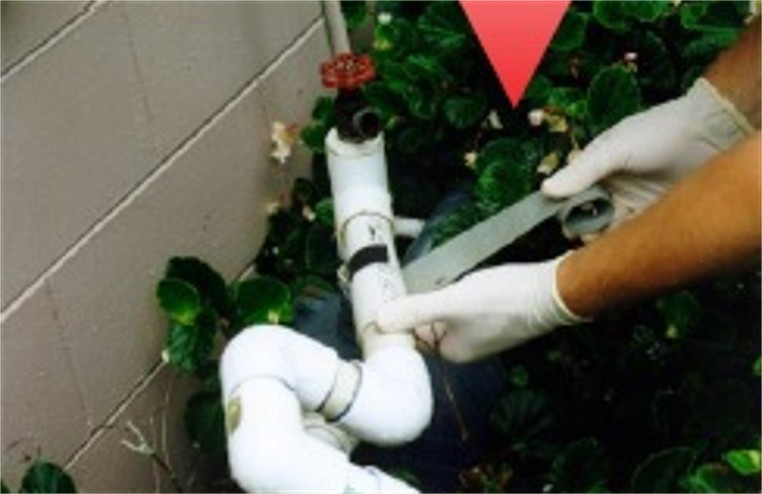
leaking pipes (with epoxy and fiberglass
cloth)? Need to do a fiberglass cloth
and epoxy repair with a non sagging
epoxy paste? (even underwater?). How
about sealing electrical connections in
a ‘glob’ of waterproof epoxy? Patching
some wood rot? One of our customers
repaired serious rot in an 100 year old
marine railway submerged under 12 feet
of water.
Wet Dry 700 has saved sinking boats
(and sunk boats - read Escape From
Hermit Island available at Amazon.com.
The authors recommend you don’t leave
your dock without this epoxy - see
epoxyproducts.com/cs_boat.html). It
is also used on leaking pools and
corroding barge mounted floating homes.
Welcome to the world of Wet Dry 700
(tm) Epoxy
Wet Dry 700 (tm) epoxy paste is a
leading example of consumer driven epoxy
technology, resulting in a versatile,
field friendly repair product for
difficult environments. Wet Dry is a
solvent free, high performance epoxy
reinforced with kevlar (tm) pulp and
feldspar/ceramic. It can be applied to
wet, damp, or dry surfaces.
Wet Dry 700 looks a bit like joint
compound (dry wall mud), or cake icing
with a simple 1 to 1 mix ratio that you
can ‘eyeball’. A scoop of Part A and an
equal scoop of Part B and you are ready
to go.
This is one of our top selling
epoxies. People first buy it for a
specific project and then generally buy
more just to have on hand. |
|
"I cannot believe how incredible this
Wet Dry 700 is. It's revolutionary.
The original repair to my storm shelter
would have lasted years if the shelter
would just shifting around in the
ground. DON'T STOP SELLING THIS STUFF!"
Jeff 1/2013
( 10/2013)
Comments: Returning - Underwater
repair
"My third or
fourth order and am still quite pleased
with the result. It has many uses above
and below the water line"
|
|
Another Amazing Product
- ALUTHANE
aluminum Moisture Cured Urethane Coating
- corrosion fighting, heat reflecting,
temperature resistant sealer, primer,
top coat. Use on wood, metal,
fiberglass, cement.
READ MORE |
|
PROGRESSIVE EPOXY POLYMERS, INC - 603 -
435 - 7199
Amazing Products - Amazing Support
(see
our home page CLICK HERE) |
|
data sheets and msds and SDS sheets
at
epoxyproducts.com/datamsds.html |
water activated pipe wrap repair kit
16. Always mix the epoxies in one container then pour it into a second container and apply it from the second container.
The reason is that mixing is never very good at the corners, edges and sides of the mixing container. If you apply
the epoxy from the primary mixing pail you will certainly get some of the unmixed epoxy from the bottom of the
container and that epoxy will not harden. Transferring the epoxy to a second container leaves the unmixed epoxy
behind, or blends it into the well mixed epoxy.
17. The difference between polyester (fiberglass) resins (commonly used in fiberglass boats) and epoxy resins:
Polyester resins are much less expensive, have very strong fumes, are more porous than epoxy resins, and only sticks
really well to itself. For anti-blister
marine barrier coats, and bonding to wood,
steel, etc. use epoxy resin not polyester resin. Generally epoxies (which are often solvent-free) can be applied
to foam products whereas the polyester resins will dissolve these products. For more 'boating tips' click
here.
18. End users can thicken epoxy with many things, Tiny glass spheres, known as micro-spheres or micro-balloons
are commonly used. Besides thickening, their crushable nature makes sanding the hardened epoxy easier. On the downside,
they work like tiny ball bearings, resulting is sagging and slumping. Another thickener is fumed silica (a common
brand name is Cabosil (tm)) which looks like fake snow. About 2 parts fumed silica with one part epoxy will produce
a mixture similar in texture and thickness to petroleum jelly. Micro-spheres and fumed silica can be combined together.
19. While floor epoxies are very common, for serious and demanding applications the epoxy is either mixed with,
or applied under and above, quartz (sand) or aluminum oxide grains. Either way, the result is really a quartz or
aluminum oxide floor, held in place with the epoxy. The quartz, and even better the aluminum oxide, is much more
durable and wear resistant than the epoxy alone.
20. How thick should your epoxy coating be? Thicker is not necessarily better. The paint on your office walls is
probably 2-4 mils thick (1000 mils = 1inch). Ten mils is considered a fairly thick industrial coating. A gallon
of epoxy applied at 10 mils will cover 160 square feet. That same coating, applied 1/4 inch thick, will only cover
6.5 square feet. To be price competitive with the 10 mil coating on a cost per square foot basis, the quarter inch
thick coating would have to be very inexpensive. A primary way to reduce cost is to use low quality resins and
lots of cheap fillers. As a result, the thicker coating may be inferior to the thinner, higher quality coating.
21. Adhesion of underwater applied epoxies: Underwater epoxies generally have good to excellent adhesion to most
submerged surfaces, (i.e. emergency boat hull repair) however, steel surfaces in saltwater environments can be
a problem. Such surfaces are often protected by a cathodic protection system. These systems use electrical current
to suppress corrosion. Dissimilar metals in saltwater also form tiny electrical cells. Because epoxy bonding is
due to molecular attraction of charged particles, existing electrical charges, known or unknown, can interfere
or disrupt epoxy bonding. It is best to test underwater coatings for possible cathodic adhesion problems if used
in marine settings on steel surfaces.
22. Epoxies and other paints/coatings should not be applied directly to galvanized surfaces. Galvanization is itself
a protective coating, one that works by forming its own protective layer. Epoxies applied to galvanized surfaces
will soon peel off. If galvanized surfaces must be coated, be sure to use an approved primer. Aluminum is also
another metallic surface that epoxies sometimes have a difficult time getting a good bond to. Aluminum quickly
forms an oxide layer (why it doesn't rust) - you need to coat it after sanding before the oxide layer reforms.
Also, many (not all) epoxies are very brittle and hard. Many aluminum surfaces tend to flex and when they flex
something gives - usually the hard epoxy coating pops off.
23. Fisheyes are areas on a painted surface where the coating literally pulls away for the substrate leaving a
coatingless void or fisheye. Often fisheyes are caused by surface contaminants such as a bit of silicon, wax, or
oil. I have also seen them on clean plywood where epoxies paints have been used as sealers and the problem might
be due to uneven saturation (soaking-in) of the epoxy into the wood. Surface tension plays a big part in fisheyeing.
There are some additives that can be mixed into the epoxy that will reduce surface tension. Likewise, on wood,
applying several coats of solvent thinned epoxy, instead of one coat of unthinned epoxy, seems to work well. Applying
a thick coat of epoxy over a contaminated fisheye surface will bury the fisheye but expect the coating to peel
away in the future. As a rule of thumb, always suspect some sort of surface contamination as the primary cause
of fisheyeing. Pinholes are similar but
caused by expanding air bubbles under the still soft epoxy. Coatings
can fail for lots of other reasons.
24. Adding a bit of solvent to a solvent based or solvent-free epoxy is something that most manufacturers would
not officially approve of and something that might not work with all epoxies. However, it can be done (unofficially)
with the epoxies I deal with. Adding solvent to these epoxies will: 1) thin them out; 2) increase
pot life; 3) allows
them to flow off the brush/roller a bit more smoothly; and 4) perhaps allows them to ‘soak-in', penetrate, or may
be soften, the substrate just a little bit. Not change is visible in the epoxy unless 12% or greater solvent is
added. With that amount of solvent, the epoxies no longer cure with a glossy finish.
25. It is best to use epoxies with a mix ratio close to 1 to 1 as opposed to something 4-1, 5-1, etc. because errors
in the mix ratios can be more pronounced with the latter. That said, no matter what the mix ratio is, some epoxies
are more forgiving of mix ratio errors than others. One ‘trick' of epoxy vendors with odd or very sensitive mix
ratios is to sell calibrated pumps that disperse the epoxy components in exact amounts.
Two Part
Epoxy Product Groups:
(EVERYTHING-EPOXY.INFO --- Intro to
basic epoxy resin types )
|
SEVEN EPOXIES/COATINGS THAT
WILL SOLVE ALMOST ANY PROBLEM
VISIT NOW
|
|
(FOR A COMPLETE
LIST OF PROBLEM SOLVING COATINGS VISIT OUR
HOME PAGE)
|
|
|
|

"The Epoxy Guru"
FOR CASE STUDY
EXAMPLES AND A PLACE TO ASK QUESTIONS - VISIT THE
EPOXY GURU
|
|
Epoxy Floor Coatings -
Sampler Kits
1) NEW Epoxy Floor/
Deck non slip coating (ROUGH COAT (TM) FLOOR EPOXY) Check out the 8 oz test kit of
Rough Coat (tm) - a tan colored solvent based epoxy floor
coating with non slip grit already mixed in. Standard unit size is
one gallon which covers about 160 sf. Texture is suitable for bare
feet. Use on boat decks, garage floors, shower areas etc.
This product is
featured on the GreatThings4u.com website.
2)
Solvent Free Industrial Floor Epoxy - 48 oz test kit
of IFF in beige or light gray. Tired of the low end
stuff sold in mass market box stores or hard sell epoxy
flooring web sites run by a marketing major and staffed
with ex-shoe salesman just interested in your money?
Check out our industrial - commercial (you can buy 15
gallon units), solvent free, Industrial Floor Epoxy
(even the product name is simple, no frills labeling).
Use with or without chips (order separately - picking
colors and percentages), and with or without clear epoxy
or poly intermediate or topcoats. Shop like a
Professional - where you pick and select what you need.
This product is
featured on the
Best Epoxies website.
CLICK HERE
(floor epoxy paint options)
to see these products in our online catalog.
|
|
The Benefits of
Solvent Free Epoxies
(zero VOC - 100%
solids)
(Same for epoxy
paints and epoxy floor paints - see
differences between)
* A smooth
non-porous, cleanable with strong cleaners surface (thus
antimicrobial - mold and mildew resistant) and great
for children's play rooms, bathrooms, showers etc.). Thus
common in garage, shops, labs, trailers, etc.
* Solvent free
epoxies little or no odor and no solvents to fill the air
(great news for allergy and asthma prone during application)
* Wet thickness
equals dry thickness (and it is a thick coating to start
with) - so equal in thickness to many coats of 'regular'
paint.
* Thick and self
leveling it fills and hides small chips, depressions, cracks
etc. Fill them during application and they will not reappear
when the epoxy cures.
DISADVANTAGES
- all solvent
free epoxies yellow, especially in sunlight --- they will
scratch --- they have a surface bond only so they
needs a top notch bonding surface to adhere to --- there are
MOISTURE DURING CURE issues -- solvent free epoxies have
a short pot life (working time during application) - air
escaping from concrete can form bubbles in the thick solvent
free epoxy (there are ways around this, but you need to be
told of this possible issue).
CONSUMER
WARNINGS - ***
Some questionable epoxy vendors like to imply that only
their solvent free epoxy has these benefits, which is not
true. *** Some questionable epoxy vendors will compare their
solvent free epoxy to other vendor's water based epoxies and
solvent based epoxies. These are unfair comparisons designed
to make their products look 'superior.'*** Some
questionable vendors will deny their epoxy yellows (water
based epoxies have limited yellowing - dark colors don't
show yellowing). *** Some vendors will promote 'special
epoxies (novolac, cycloaliphatic, flake filled, coal tar,
etc.) when they are not necessary for your intended
application. *** Some questionable epoxy vendors will
'forget to mention' the potential disadvantages and problems
listed above. *** No epoxy vendor can know the
condition and suitability of your surface for an epoxy
coating, nor can they oversee your surface preparation, and
weather/environmental conditions during your DIY epoxy
application. So all vendor Warranty documents have a
built in escape mechanism and are presented only as
marketing tools to get your business. All that an epoxy
vendor can actually warranty is that when mixed correctly
the product will harden and have the physical properties
described in the product data sheet. An honest epoxy vendor
will tell you this up-front.
|
"Best" Epoxy Product Winners
EPOXY BASICS - Learn about 2 part resin systems for painting your floor -
repairing your boat
Instant Epoxy Resin Paint Coating Expertise -25
key points
####