EPOXY SEAL AND BASEMENT LEAK STOP - REPAIR
"The Right Epoxy Fixes Darn Near Everything!"
Epoxy Sealing Basements
and Concrete Pits
Epoxy Sealer and Waterproof Options
LEAKY BASEMENTS
Epoxy Sealing Leaky Basements - Options Repair
Leaking Basement - Search for DIY solutions
Your Host and Tour Guide:
Paul Oman, MS, MBA - Progressive Epoxy Polymers, Inc. (floor epoxies, marine epoxies, underwater epoxies, repair epoxies)
Member: NACE (National Assoc. of Corrosion Engineers), SSPC (Soc. of Protective Coatings)
Board member: Friends of the Suncook River - 501(c)(3) non profit ----- Founder: Friday Night Paddlers .
"Professionals helping Professionals"
PROGRESSIVE EPOXY POLYMERS, INC.
|
WHO ARE WE? Watch our short 2-minute Progressive Epoxy Polymers video |
We are the only technology based coating/epoxy/resin company that actively encourages your phone calls, not just during our East Coast work hours but also after/before hours, evening, weekends and even holidays. We're available when you are. We form a personal relationship with our customers and freely share technical information, how to-advice, product information and tips-and-tricks. Speak with a non-salesman technical professional with over 25 years of experience in the resin/coating/epoxy industry (no newbie staffer on the phone lines!). Floors, tables, boats, leaks, rot repair. We handle it all! We are an 'always available,' one-on-one, technical/scientific, coating company (watch our video). We are NOT one of those fluffy/slick mass sales firms the dominate the internet selling cheap third party (made in China???), low end epoxies and coatings with no real knowledge of what they are selling and quotas to sell to as many people as possible. 603-435-7199 (east coast time).
|
PAGE AND SITE NAVIGATION |
|||||||||||||||||
Epoxy Repair Links Page ====> This 'Linked To' Epoxy Sub-Page
No Sales Tax applied. Save Money, you're shopping in Tax Free New Hampshire
MEMBER: Internet Epoxy Confederation (IEC - CLICK HERE TO VISIT) -- "Where Professionalism Still Matters"
We've been selling epoxy - marine epoxy (boat building - wood / fiberglass repair) industrial coatings - garage paint - underwater epoxies - thick putties - tabletop resins and supplies since the early 1990's |
|
AN OFFER YOU SHOULD NOT REFUSE Before you buy anything from anyone, we HIGHLY SUGGEST you CALL 603 435 7199 OR EMAIL US (24/7/365 - except for Sunday morning church fellowship).. Let's make sure you have the right products for the job, an understanding of how to use them and a feel for what might go wrong. This is really important if you have never resealed a pebble deck. And if you purchase our products feel free to CALL OR EMAIL US again (24/7/365) before you use them for "tips and tricks" or just some "hand-holding." Perhaps when you're done you'll let us put up some of our pictures on our web site. We have much more information, customer stories, anecdotes, etc. we can share that are not on this web page but might be helpful to you. Email us with your phone # (or call us direct) and we will chat on the phone. You should know your vendor and we want to know our customers. DIRECT EMAIL LINK (CLICK HERE) Most people are not sure what product or products they need to use, how much product they need, and what to expect when using those product(s). You cannot get that from just reading a web site and most web sites just want you to order their product on-line and then go away. We're different. Please call or email us so that your project goes smoothly and it is Win-Win for everyone. You're talking with: Paul Oman, MS, MBA -- Member since 1994: NACE (National Assoc. of Corrosion Engineers), SSPC (Soc. of Protective Coatings) -- Technical Help - not sales talk! "If you have knowledge, let others light their candles in it." -- Margaret Fuller, Journalist |
Concrete sealing /sealers info page - epoxy and non epoxy options - Click Here -
|
Infiltration and influx (I & I) of water through concrete or ‘block'
surfaces located below grade is a common problem. Home owners with cellars, city managers with manholes, and businesses
with sumps and collection pits frequently have problems with seepage or leakage. Such problems can be solved thanks
to several new products now on the market. These products will work on moisture saturated surfaces and on the ‘inside'
negative pressure surface (the inside wall of a leaking basement as opposed to the outside surface where the water
presses the coatings into the concrete instead of away from the concrete).
We really appreciate you visiting PROGRESSIVE EPOXY POLYMERS, INC. and our web site: EPOXYPRODUCTS.COM. Take advantage of the CONTACT links on this page to ask questions about our products and/or your projects. You can stay in touch with us via our NEWSLETTER (link on our contact page) which is emailed every 6-8 weeks.
Professionals serving Professionals (and informed consumers) - Member: NACE (National Assoc. of Corrosion Engineers) - SSPC (Soc. of Protective Coatings) - BETTER BUSINESS BUREAU (buy with trust) This current page is all about: EPOXY SEAL AND BASEMENT LEAK STOP WATER PROOF- REPAIREpoxy Sealing Leaky
Basements - Options Repair
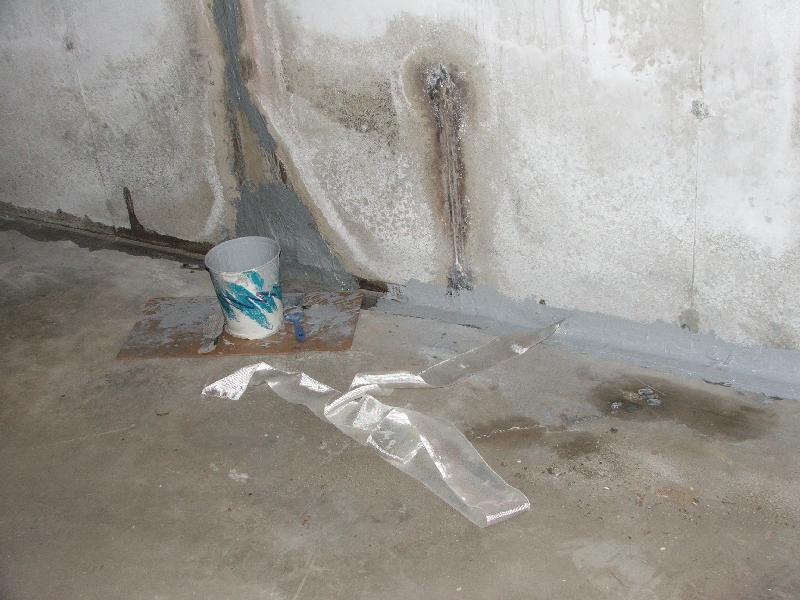
Current thinking seal around the 'leak' with Bio Vee Seal then patch crack or damaged area with a coat of our Corro Coat FC 2100 epoxy with Kelvar and Ceramic. The Bio Vee Seal will keep the water from migrating through the concrete and around the epoxy after you've sealed the crack. Note that the Bio Vee Seal does not work on cracks or sealed (or painted) surfaces. It also is less effective on 'cinder' blocks. --- both these products are non-hazmat, solvent free and can be applied to wet surfaces ---
more info -- CLICK HERE
DISCLAIMER: The above comments are simply that, comments and ideas. The ability of these or other products to seal a basement or sump is not guaranteed as many factors beyond just the sealing product comes into play. |
|||||||||||||
|
Concrete Sealing in a Nutshell There are 3 kinds of concrete sealers 1) inexpensive products that contain wax or paraffin dissolved in a solvent. Easy and cheap, but if you use these you will ever be able to coat the surface with any kind of paint or epoxy (you cannot paint on wax!). You cannot remove with solvents, which will just move the wax around. Use this kind of sealer and you are locked out of doing anything else forever. 2) Liquid sealers that are like paint and sit on the surface you are coating. No way you be be certain these will not peel or chip off and they may prevent you from top coating them with other products. 3) Internal concrete sealers, like our Bio Vee Seal. Bio Vee soaks into the exposed concrete and forms crystals within the concrete itself. It leaves nothing (except perhaps some tiny white crystals) on the surface. There is nothing to peel or chip and it leaves the surface as it was, allowing you full options to top coat with any product. Useful links: Bio Vee --- Concrete Sealers --- Industry article on sealing --- basement leaks/sealing --- Floor coating links or call 24/7 for help or to order - 603 435 - 7199 |
ON-LINE CATALOG HOMEPAGE.
Inside Our non-marine, commercial, DIY Catalog:
corro coat FC 2100; water gard 300; CM 15; crack coat™; liqua tile 1172 potable water; water prime
Find Corro Coat FC 2100 and Water Gard 300 epoxy in our Best Selling - fix anything Catalog
water bond (water based); industrial floor epoxy; bio vee seal; walnut shell; rough coat grit filled epoxy floor paint; epoxy clear top resi
wet/dry 700; splash zone A-788, epoxy cream; splash zone a-788
Find Wet Dry 700 epoxy in our Best Selling - fix anything Catalog
low V epoxy; basic no blush; ESP 155; Bio-Clear 810; epoxy clear top resin
Find Low V, Basic No Blush, and ES 155 epoxy in our Best Selling - fix anything Catalog
Aluthane moisture cured urethane; Acrylic Poly UV Plus and other 2 part polys ; Capt. Tolley's creeping crack sealer; india spar varnish;
Find Aluthane in our Best Selling - fix anything Catalog
fumed silica; fiber fill; micro balloons/micro-spheres; graphite; wood flour; EZ thick, rock flour;
water activated pipe wrap; TA 661 solvent-free epoxy brush cleaner; fiberglass tape/cloth
short nap epoxy rollers; epoxy/stone deck resurfacing roller; 1 inch foam brushes; 2 inch bristle brushes; tongue depressors
Questions? / Phone order? / EMAIL / CALL 603-435-7199 EST / BUY ONLINE
GOOGLE SITE SEARCH - Click here Epoxy specific site search
Click here - YouTube video. Learn about Progressive Epoxy Polymers Inc.
EVAL4U - how to evaluate your epoxy vendor - CLICK HERE -
Epoxy Only Web Google Search
#1) Google
Everything Epoxy Searches
#2) Google
Marine Epoxies Searches
#3)Google
Floor Epoxy Searches View
our Progressive Epoxy Products, Inc.

Epoxy Sealing Leaky
Basements - Options Repair
Leaking Basement - Search for DIY solutions