EPOXY RESIN SYSTEMS AND UV DAMAGE
GOOGLE SITE SEARCH - Click here
Click here - YouTube video.
The UV Blocker - Absorber
Epoxy Resin Protection Page
There are chemicals that are considered UV blockers and
other chemicals that work as UV absorbers.
UV Blocker
Absorber Epoxy Resin Paint Protection
UV Protection - Basic info on UV blockers and absorbers
Your Host and Tour Guide:
Paul Oman, MS, MBA - Progressive Epoxy Polymers,
Inc.
(floor epoxies,
marine epoxies, underwater epoxies, repair epoxies)
Member: NACE (National Assoc. of
Corrosion Engineers), SSPC (Soc. of Protective Coatings)
"Professionals helping Professionals"
PROGRESSIVE EPOXY
POLYMERS, INC.
CALL 603-435-7199 (or
email).
We are the only
technology based coating/epoxy/resin company that
actively encourages your phone calls, not just
during our East Coast work hours but also
after/before hours, evening, weekends and even
holidays. We're available when you are. We form a
personal relationship with our customers and freely
share technical information, how to-advice, product
information and tips-and-tricks. Speak with a
non-salesman technical professional with over 25
years of experience in the resin/coating/epoxy
industry (no newbie staffer on the phone lines!).
Floors, tables, boats, leaks, rot repair. We handle
it all!
We are an 'always available,'
one-on-one, technical/scientific, coating company (watch
our video). We are NOT one of those fluffy/slick mass sales firms the
dominate the internet selling cheap third party (made in China???), low end
epoxies and coatings with no real knowledge of what they are selling and
quotas to sell to as many people as possible. 603-435-7199 (east coast time).
|
PAGE AND SITE
NAVIGATION |
Epoxy Education Links Page ====> This 'Linked
To' Epoxy Sub-Page
FYI: catalog pages are blue (marine) or yellow
(home/indust), info pages are green, product pages are purple, core pages are
gray
No
Sales Tax applied. Save Money, you're shopping in Tax Free New Hampshire
|
NOTICE: Legal notices, Terms
of Service, warranty information, disclaimers, health warnings, etc. are
required reading before using website, ordering and/or using Products.
Any such use and/or ordering, online or by telephone, shall constitute
acceptance and knowledge of all such terms.
CLICK HERE (www.epoxyproducts.com/legal.html) to access these terms. |
MEMBER:
Internet Epoxy Confederation (IEC -
CLICK HERE TO VISIT) -- "Where Professionalism Still Matters"
We've been selling epoxy - marine epoxy (boat building - wood / fiberglass
repair) industrial coatings - garage paint -
underwater epoxies - thick putties - tabletop resins and supplies since the
early 1990's
|
Epoxy Floor Section in
our online catalog - CLICK HERE

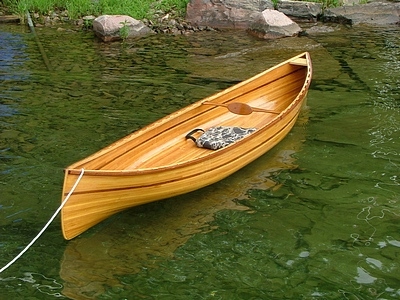
As a 'hands on' epoxy vendor (and current owner of more than 20 canoes,
kayaks and small sailboats) I've very interested in keeping keeping my painted, varnished, and epoxied surfaces
as bright and shiny for as possible. As an epoxy 'salesman' I'm also interested in keeping epoxies from yellowing
due to UV (sun) exposure. Clear epoxies will turn yellow, blue epoxies turn greenish etc., within a few days or
weeks.
I like to test and experiment and I have access to all sorts of products to try alone and in combination (and I
don't mind buying products like everyone else, just to test). I also have regular contact with the technical folks
at the 4 or 5 different companies that make our epoxies and polyurethanes, so over the years I've been sort of
self educated about UV protection.
I have yet to find any useful primer on clear coats and UV protection anywhere, so I guess it is up to me to offer
up what I know about the subject. So, here goes.....
|
UV Blocking Products
offered by Progressive Epoxy Polymers
1) Acrylic Poly UV Plus - a two part LPU clear gloss coating with max UV protection. LPU coatings
are very tough. Similar to Auto Clear Coat. Not a user friendly
coating. Best applied by spray, or "roll and tip" methods on most
applications. Roller applied on floors. Often used to keep epoxy
floors from yellowing. Sold in gallon units. High solvent levels.
Not for sale in California. Apply two coats.
2) India Spar Varnish - the good old
fashion stuff found on yachts in sunny harbors for over 100 years.
Natural UV blocking. Not for sale in California. Visit our
Varnish page
for max protection and life - epoxy
under India Spar Varnish - varnish under Acrylic Poly UV Plus
both products are only available in
gloss.......
Find both in our marine catalog - CLICK
HERE -
Find iboth n our industrial catalog - CLICK
HERE -
|
We really appreciate
you visiting PROGRESSIVE EPOXY POLYMERS, INC. and our web site:
EPOXYPRODUCTS.COM. Take advantage of the CONTACT links on this page to ask
questions about our products and/or your projects. You can stay in touch with us
via our NEWSLETTER (link on our
contact page) which is
emailed every 6-8 weeks.
This
current page is all about:
EPOXY RESIN SYSTEMS AND UV DAMAGE
UV Blocker
Absorber Epoxy Resin Paint Protection
UV Protection - Basic info on UV blockers and absorbers
|
 |
WOW!
35%
- 40% of all daily online or telephone orders are from existing
customers. That's an amazing 'REPEAT
CUSTOMER" number. |
|
EPOXY-ONLY WEB SEARCH
|
603 - 435 -
7199 ANYTIME 24/7 FOR HELP OR ORDERS |
|
 |
|
The best way to block UV is with pigments. In other words paint your epoxy. The pigments in the coating will stop
the UV. Of course, the UV will damage the top of the pigmented coating surface. You the paint will fade, the colored
epoxy surface will yellow, etc. The bigger issue is when working with clear coatings or attempting to keep a pigmented
surface from fading or yellowing with UV exposure.
There are chemicals that are considered UV blockers and other chemicals that
work as UV absorbers. They are different products. Reportedly the combination of both works better than either one alone. These things can be added to coatings,
but not to epoxies (despite what people sometimes try to tell me). Trust me, if it could be done successfully,
it would have sweep through the industry. My tech guys would have known all about it, if not actually been involved
with it. I assume those chemical additives' mess up the properties of epoxies, I don't know for sure, I just know
there are no epoxies with UV blockers or absorbers.
I have done tests on the best way to maintain a 'varnish' like clear, exterior finish (CLICK HERE FOR THAT PAGE). It basically comes down to sealing the surface with
epoxy and then coating with varnish (which seems to have natural UV blockers - but only lasts a year or two) or
some other product with UV blocking and/or absorbing chemical additives.
I was surprised to learn from my suppliers that most clear coat products have very little UV protectors added to
them (many have a "UV Package" in them that does have a small/token amount of UV protecting chemicals).
I suspect it has to do with cost. When I had one of my formulators take our 2 part acrylic polyurethane clear coat
(which I always just assumed, incorrectly, had UV blockers/absorbers) and and the maximum amount of UV blockers
and absorbers to it, it added over 20% to the manufacturing cost of an already expensive, high end coating.
Our product, Acrylic
Poly UV Plus™, and auto clear coat (which has a very similar composition) are the two
high performance clear coat products with max. UV protection. NOTE that this product is classified as a floor coating.
It's VOC level is too high for sale in Southern California.
Note
that 2 part urethanes can be tricky/difficult to brush apply. They set up
quickly on applied surfaces and can leave brush marks, even when special
'reducers' are used. If using a brush, have our 'slow' SU 93 reducer (see below)
on hand, use a quality brush, and test your application first, in case you're
not happy with the brushed on result (such as on boat hulls, poured on epoxy
table tops, etc.).
| Stopping UV
damage and UV yellowing
---------------- Josie Lewis (6/2010) wrote:
Hi Paul: I recently
purchased some clear epoxy and Acrylic Poly UV Plus from your
company. I have access to a UV chamber which simulates high altitude
direct UV exposure. I thought you might be interested in my
findings. I used a Masonite panel painted white and then coated with
the epoxy. On half of the epoxy coated panel, I brushed on one coat
of UV Poly and put it in the chamber for 644 hours at 50 C (the heat
accelerates the exposure). Attached is a picture of the results. The
masonite cracked a bit and separated due to a bit of wetness in the
wood (unrelated to the resin). The epoxy ambered dramatically
within about 50 hours. After 644 hours, the UV Poly showed a slight
bit of ambering from the original control but it is marginal at
worst. The technician who ran the test said if it isn't yellow at
644 hours it is basically indestructible. I also tested several
other 2-part resin products with the UV Poly and had the same
result. You have a great product. I now feel secure knowing that my
resin art, protected with the Poly UV Plus, will be archival and
protected for long years. I will be ordering more soon!
Best, Josie (6/2010)
Order Acrylic Poly UV plus - cannot be
sold in Calif. - and all our other products at our
King
Cart Storefront. Acrylic poly UV Plus
is in the non-epoxy section.
Two Part Poly info/web site -----
UV issues -----
Epoxy/Poly Only Google Search -----
Visit the Epoxy Guru
|
Cycloaliphatic epoxies are one small group of epoxies
using a very high end curing agent (we carry several including a cyclo based marine epoxy - Premium No Blush). When I researched the internet for cycloaliphatic epoxies all the references were about high power electrical
line insulators and how the electrical industry was switching from glass insulators to cycloaliphatic epoxy insulators
because they found the cycloaliphatic insulators suitable for the exposed weathering and UV they received. I can
state that the cyclo-based epoxies will yellow, but more slowly. If you type cycloaliphatic epoxy into a web search
engine you'll still find many of the electrical industry posts, although they are now mixed in with lots of non-electrical
related sites too.
The only other thing I can offer is that I did put some epoxy paint on both sides of what I assume was ordinary
plate glass. The epoxy that was on the outside of the glass, yellowed as expected but the epoxy on the inside of
the glass had little or no yellowing. I assume that what I think is regular glass, does (to my surprise) provide
some degree of UV protection.
A commercial
epoxy pour contractor recently used our Bio Clear 810 to replace a badly
yellowed epoxy covered logo in the INSIDE floor of regional airport
terminal with our 'almost no yellowing' Bio Clear 810 (cyclo-aliphatic epoxies
to the rescue!) This is a good example of why you want to use only a
cyclo-aliphatic epoxy for your bar top. The other clear epoxies sold for table
tops suffer from bad (excessive?) yellowing (and I bet they don't even mention
it on their web sites). Because of the yellowing, it is generally not a
good idea to have a poured epoxy table / bar outside in the sun, but if you do -
use our cycloaliphatic epoxy and keep it covered when not in use.
----------
Now for a more technical discussion of UV blocking chemicals. The following
textcan be found on the WoodenBoat
Forum in the Bulding/Repair Section in a thread tagged "Appropriate
UV-shield for epoxied deck." It is a post dated 12-28-05 by a gentleman listed as J. Blazy, who is obviously
an expert and much more of an expert than I.
Please allow me to provide some minor exterior finish Chemistry 101 from back in my days as a polymer scientist
developing UV blockers in clear coatings for a 100% solids polymer company:
UV protection in the best modern boat varnishes would a synergistic combination of two additives: Tetratraziole-based
UV blockers and Hindered Amine Light Stabilizers (HALS).
The best and largest supplier of these additives are from Ciba-Geigy (Five Year Clear mentions them on their website
also), and both additives are deep yellow in color, yet crystal clear liquids, not milky (some will say that the
milkiness of the varnish is the UV additives - not true).
These additives are used in a 2 to 1 ratio together, where the overall formula will have at most (very expensive
formula loading) 2% by weight Tinuvin (Ciba's brand name) 292 (HALS) and 1% by weight of any of the 400 series
of Tinuvin tetratraziole UV blockers. (HALS do not block UV, but "mop-up" the excess free-radicals created
from UV oxidation, while the Tetratraziole UV blockers absorb the UV light similar to opaque pigment, but are clear
additives)
This is the first dead giveaway to me of the effectiveness of any given clear marine varnish - How "yellow"
or amber the coating is - the more yellow, the better UV protection. The Ciba additives are also very expensive,
so you get what you pay for - i.e. if the varnish is cheap, it'll likely have very little UV protection, and vise
versa (hopefully).
This is highly dependent upon the elasticity of the given formula, though. You could have the most expensive, highest
loaded UV blocking package in a given formula, but if the urethanes cross-link too tightly, you'll get brittleness
and cracks. This is perhaps the advantage of the one-part varnishes that are tried and true, however it is possible
to formulate 2 part, elastic varnishes quite well, and thats why they are also high-performance (they spray better,
etc).
All this is also dependent upon the mil thickness of the final coating - Too thin, and the sunlight easily penetrates
past even the best blockers - too thick and you risk polymer shrinkage cracks.
And one final observation - even the best UV protection in the best aliphatice urethane formula will eventually
"extinguish" - which is chemist-speak for the "burning out" of these expensive UV blockers/HALS
over the years. This is why you want to apply the maximum safe mil thickness, so that as the surface of the coating
extinguishes, the sub layer is going to be "fresh"...
####
Internet Epoxy
Confederation (IEC) associate .
Progressive Epoxy Polymers, Inc.
www.epoxyproducts.com

UV Blocker
Absorber Epoxy Resin Paint Protection
UV Protection - Basic info on UV blockers and absorbers
####